ChatGPT SEO: Outline for Citations, Not Rank Tracking

Key takeaways
- ChatGPT SEO is brief → draft → structure check—not rank-tracking dashboards in chat.
- Paste verified facts; use section prompts instead of one-shot essays.
- Score the published URL before you prompt-test in ChatGPT.
What is ChatGPT SEO? It is using ChatGPT to move faster on SEO content work—turning a target query into a brief, drafting titles and sections with verified facts, shaping the page for extraction, and checking structure before publish. It is not a substitute for crawl logs, sitemap audits, or rank-tracking dashboards that promise visibility inside chat.
| Situation | I’d start here | Skip if |
|---|---|---|
| New guide or comparison page | Brief + section prompts in ChatGPT | You need live crawl errors or index coverage |
| Thin category page refresh | Rewrite intro + one table from a fact sheet | You only want a rank-tracking screenshot |
| AI Overviews / ChatGPT citation goal | On-page shape + structure check after edit | The page is blocked by robots or behind login |
| Weekly blog cadence | GEO writer with outline rules + structure check | You paste chat output without sources |
| Brand monitoring only | Paid visibility tools (different job) | You have not fixed intro, lists, or attributed stats |
What ChatGPT SEO is—and is not
ChatGPT helps with:
- Turning a keyword into H2s and a fact sheet you can paste
- Drafting titles, meta descriptions, and section copy from that sheet
- Rewriting dense paragraphs into lists when you edit for accuracy
ChatGPT does not replace:
- Site crawlers, sitemap checks, or robots.txt tests
- Rank-tracking or “ChatGPT visibility” SaaS when pages still lack quotable blocks
- Human review on pricing, compliance, and YMYL claims
OpenAI documents model output as draft content. Treat every stat, URL, and product name as unverified until a human checks the live source.
The get cited by ChatGPT framework covers citation craft; this page walks through ChatGPT-assisted SEO from query to publish after checks.
Step 1: Build a brief ChatGPT can follow
Before the first prompt, write a one-page brief:
- Target query in the reader’s words (matches the H1 you plan to publish)
- Three to five H2s, each naming a job (“Compare plans”, not “Overview”)
- Verified facts — pricing lines, feature limits, official URLs, dates
- Claims you cannot source — competitor market share, customer logos, unsourced stats
Tell the model: use only the fact sheet for numbers and product names; write [NEED SOURCE] when a fact is missing.
For the full outline-first prompt loop, see ChatGPT for content generation—this page stays on which SEO tasks belong in ChatGPT; that page stays on section-by-section prompting.
Step 2: Draft titles, meta, and sections
Ask for one block at a time instead of a 2,000-word dump. Sample shape:
Write ## Compare plans for [query]. Use only these facts: [paste bullets]. Open with a direct answer in sentence one. Add a comparison table with the same columns for each plan. Do not invent prices.
After each block:
- Delete filler adjectives (“robust”, “seamless”, “cutting-edge”)
- Fix passive voice (“supports SSO” not “SSO is supported by the platform”)
- Mark unsourced numbers for human verification
For meta titles, ask for three options under 60 characters with the primary keyword in the first half. Pick one that names the outcome, not “Guide + Free Tool.”
Step 3: Shape the page for AI answers
Even accurate ChatGPT copy can fail extraction if the intro buries the answer. Before publish:
- Intro = direct answer + one scannable block underneath
- Each H2 opens with the claim, not background history
- Replace long paragraphs with bullets or tables where the query expects steps or comparisons
- Attribute stats or remove them
That on-page shape is the focus of optimize content for ChatGPT. The broader patterns live in AI content optimization.
Step 4: Start from GEO Content Writer when outlines are fixed
When you already know the H2 list and fact sheet, gptmelo’s GEO Content Writer applies outline-first sections with GEO rules up front—fewer structural rewrites than a blank ChatGPT thread.
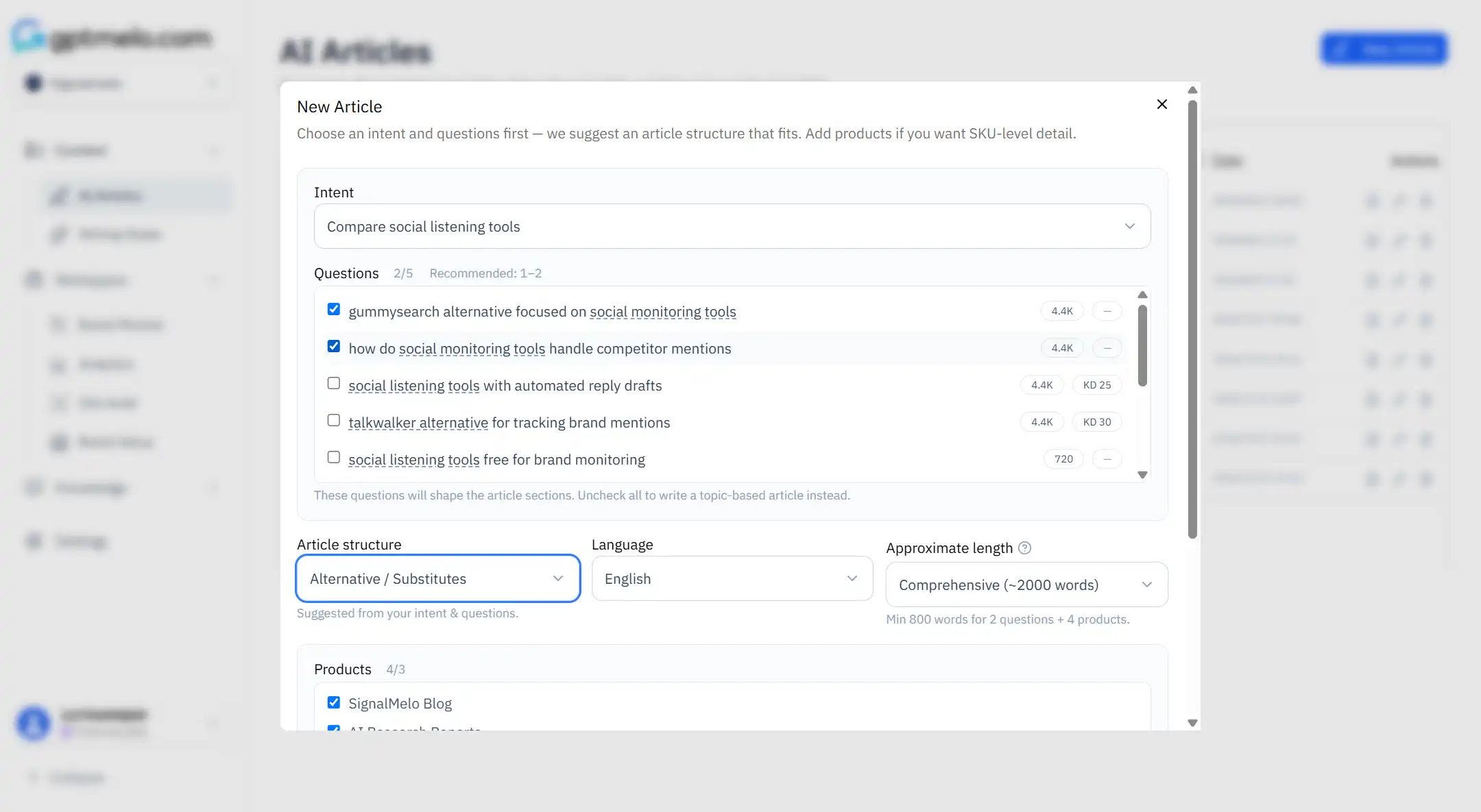
Use ChatGPT when you are experimenting with tone or messy research notes. Use the writer when you are publishing product, pricing, or comparison pages on a schedule.
Step 5: Score the live URL, then prompt-test
Paste the published URL into the GEO Content Checker. Fix intro, lists, and tables before you ask ChatGPT buyer questions in chat.
Prompt-test script (same three every time):
- The primary buyer question your H1 answers
- A comparison or pricing question if you sell a product
- A troubleshooting question your docs should own
Record: mentioned or not, which URL (if any), and any invented fact. If ChatGPT cites a competitor with a cleaner table, fix your table—not only the chat prompt.
Drafting inside ChatGPT does not create a citable page. Publish on your domain first, then test. For crawl access and discovery basics, keep AI search optimization tools on the same checklist as your on-page work.
ChatGPT SEO vs rank-tracking tools
| Job | ChatGPT + writer/checker | Rank-tracking / visibility SaaS |
|---|---|---|
| Draft and reshape copy | Strong when facts are pasted | Wrong tool |
| Fix intro, lists, attributed stats | Structure checker on your URL | Wrong tool |
| Monitor brand mentions in AI answers over time | Weak alone | Purpose-built monitors |
| Crawl errors, index coverage | Use site audit / sitemap tools | Not ChatGPT |
Semrush and similar suites still own technical SEO data. ChatGPT SEO here means writing and checking pages—not buying another dashboard because the phrase “ChatGPT SEO tool” has search volume.
Common mistakes
- Publishing chat transcripts without headings, sources, or a canonical URL
- Chasing rank-tracking keywords while priority pages still lack quotable intros
- One-shot “write a 2,000-word SEO article” prompts without a fact sheet
- Prompt-testing fifty times before fixing one thin template
- Keyword stuffing H2s while sentence one never answers the query
- Treating ChatGPT output as compliance-ready on YMYL topics without human review
Free check: an outline a model can cite
Open the GEO Content Writer. Draft a citable outline for that query — not rank tracking. No account required.
1. Fill the form. Topic is the query you want cited. Brand name and Brand website are the brand those citations should name, and its site. Open More options only if you need them.
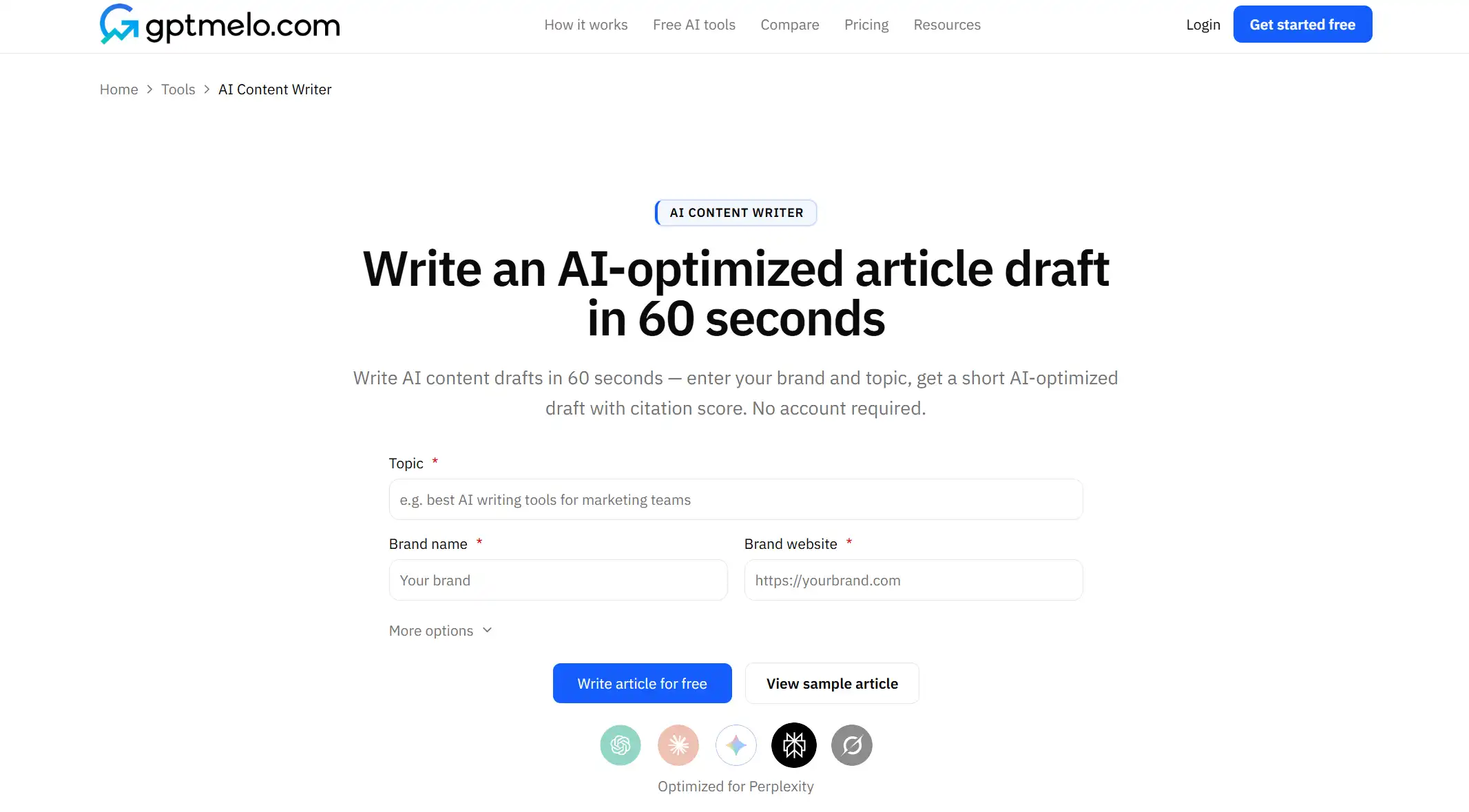
2. Write. Click Write article for free.
3. Read the result. You get a draft next to a GEO content score (Writing, Identity, Cite, Ship). The screenshot is a sample — yours follows Topic. Glance at Cite. Use Copy HTML or Copy Markdown. The score is not a fact check.
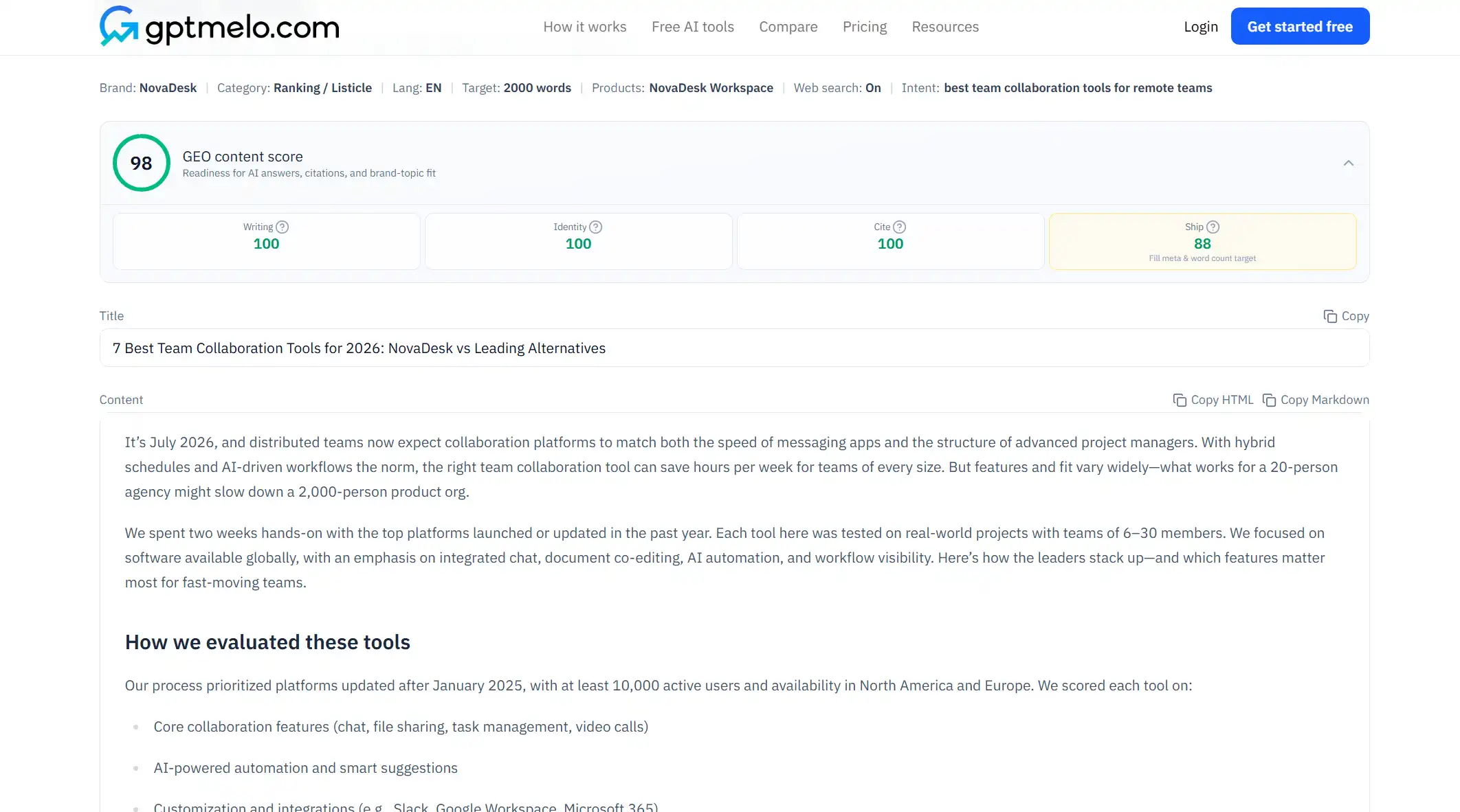
4. Edit, then put it on a URL. Read the draft before anyone else sees it. Do not treat this window as the live page.
The write-check-publish path is in GEO article writing.
FAQ
What is ChatGPT SEO?
Using ChatGPT to speed SEO content work—briefs, drafts, titles, and structure—then publishing crawlable pages with sources, not chat threads.
Can ChatGPT replace SEO tools?
No for crawl data, rankings, and site audits. Yes for drafting and rewriting when you supply facts and run structure checks before publish.
Are ChatGPT SEO rank trackers worth it?
That is a separate job from writing and on-page checks. Fix extractable pages first; add monitoring only when you need ongoing visibility reports.