Optimize Content for ChatGPT: Quotable Blocks Models Can Lift
Key takeaways
- ChatGPT cites clear answers with sources—not keyword stuffing.
- Lead with the claim you want quoted; support with lists and dates.
- Score the page before you ask ChatGPT if it would cite you.
How do you optimize content for ChatGPT? Publish a crawlable page that answers the buyer’s question in the first block, supports it with a list or table, and attributes facts ChatGPT can repeat without inventing numbers. Drafts can start in chat; citations come from URLs. This page is the on-site shape. For the outline-first writing workflow, use ChatGPT for content generation.
| If this is you | I’d start here | Skip if |
|---|---|---|
| Flagship how-to or glossary | Rewrite the intro as the answer | You only tweak the title tag |
| Product or pricing page | Complete table + dated plan lines | Cells say “contact sales” |
| Trust-sensitive advice | Author byline + sourced claims | Anonymous tips with invented stats |
| AI-drafted article | Fact-check + structure score before publish | You paste the chat thread and ship |
| Citation check after edits | Free structure / citation readiness pass | The page is still blocked by robots |
What ChatGPT can quote from your site
ChatGPT and similar assistants lift blocks: a definition sentence, a short list, a table row, a sourced claim. They struggle with metaphor-only intros, click-gated FAQ text, and pages crawlers never fetch.
You are not inventing a second keyword universe. You are making the same page easy to extract—then asking whether the model credits your URL. The longer citation craft sits in the AI citation guide.
Step 1: Answer in sentence one
Open with the claim you want quoted.
Weak: “ChatGPT is transforming how brands think about content strategy.”
Strong: “Optimizing content for ChatGPT means publishing crawlable pages with an early answer, scannable support, and attributed facts a model can lift without rewriting your site.”
Read the intro aloud. If it sounds like a press lede, shorten it until the first 100 words stand alone.
Step 2: Add one list or table under the claim
After the H2 that carries the answer, add:
- Parallel bullets (three to seven), or
- A table with complete cells
Procedural queries favor numbered verbs (“Export the sitemap”, not “Sitemap considerations”). Comparison queries favor rows with the same columns filled.
Step 3: Attribute facts and dates
Replace “studies show” with a named source. Price and limit lines need an as of style date when they change. If you lack a source, drop the number—do not invent one for the model to repeat.
ChatGPT will confidently restate fake stats. Your job is to give it fewer lies to learn.
Step 4: Keep the page crawlable
Citations need a public URL. Check that:
- Important paths are not Disallowed for the agents you care about
- The canonical matches the URL you want credited
- FAQ answers exist in HTML, not only accordion JavaScript
Drafting inside ChatGPT does not create a citable page. Publish on your domain, then test. If marketing wants a PDF one-pager, treat it as a leave-behind—assistants still need the HTML URL when they cite sources.
Internal links help too: point readers (and crawlers) to the deeper answer at the moment of need, not a footer dump of every related post.
Step 5: Score before you prompt-test
Paste the URL into gptmelo’s GEO Content Checker. Fix the biggest gaps first: intro, lists, tables. Then ask ChatGPT three buyer questions and note whether it mentions your brand or URL—and whether it invents details you never published.
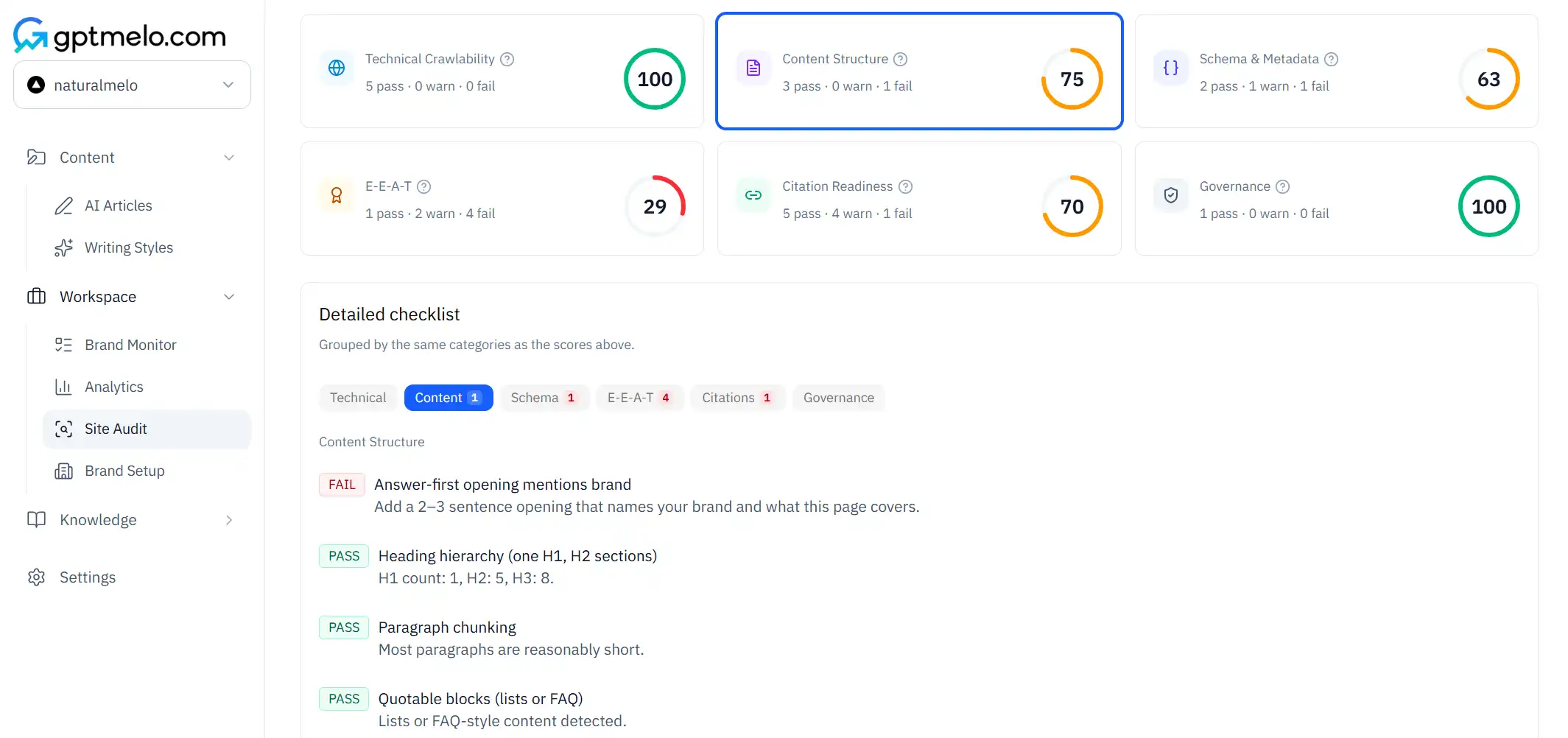
For the write, score, and publish loop in one workspace, see how GEO article writing works. Team process docs live in the get cited by ChatGPT framework.
ChatGPT optimization vs classic SEO
| Shared | Extra for ChatGPT-style answers |
|---|---|
| Crawl access, clear intent | Quotable early answers |
| Helpful structure | Lists/tables models can lift |
| Trust and sources | Less tolerance for vague “studies show” |
| Stable URLs | Credits often attach to a specific page |
Rankings still matter for discovery in search. ChatGPT optimization adds extractability on top—not a replacement for basics.
A short prompt-test script
After the structure check passes, ask the same three questions every time:
- The primary buyer question your H1 answers.
- A comparison or pricing question if you sell a product.
- A troubleshooting question your docs should own.
Record: mentioned or not, which URL (if any), and any invented fact. That notebook beats twenty one-off chats with no notes. When answers keep inventing numbers, your page still lacks attributed facts—not a new prompt trick.
Common mistakes
- Shipping the chat transcript as a blog post without sources or headings.
- Keyword stuffing every H2 while the intro never answers the question.
- Hiding FAQ answers behind JavaScript and expecting a clean quote.
- Prompt-testing fifty times before fixing one thin template.
- Promising detector games or “make it sound human” rewrites as a substitute for sources—wrong job for this page.
- Changing the URL slug after you earn a citation without a redirect.
Free check: blocks ChatGPT can lift
Open the GEO Content Checker. Paste the page you want quoted in chat — a public URL ChatGPT can fetch, not a thread. No account required.
1. Fill the form. Keep From URL selected and paste that live page. Switch to Paste content only if fetch is blocked.
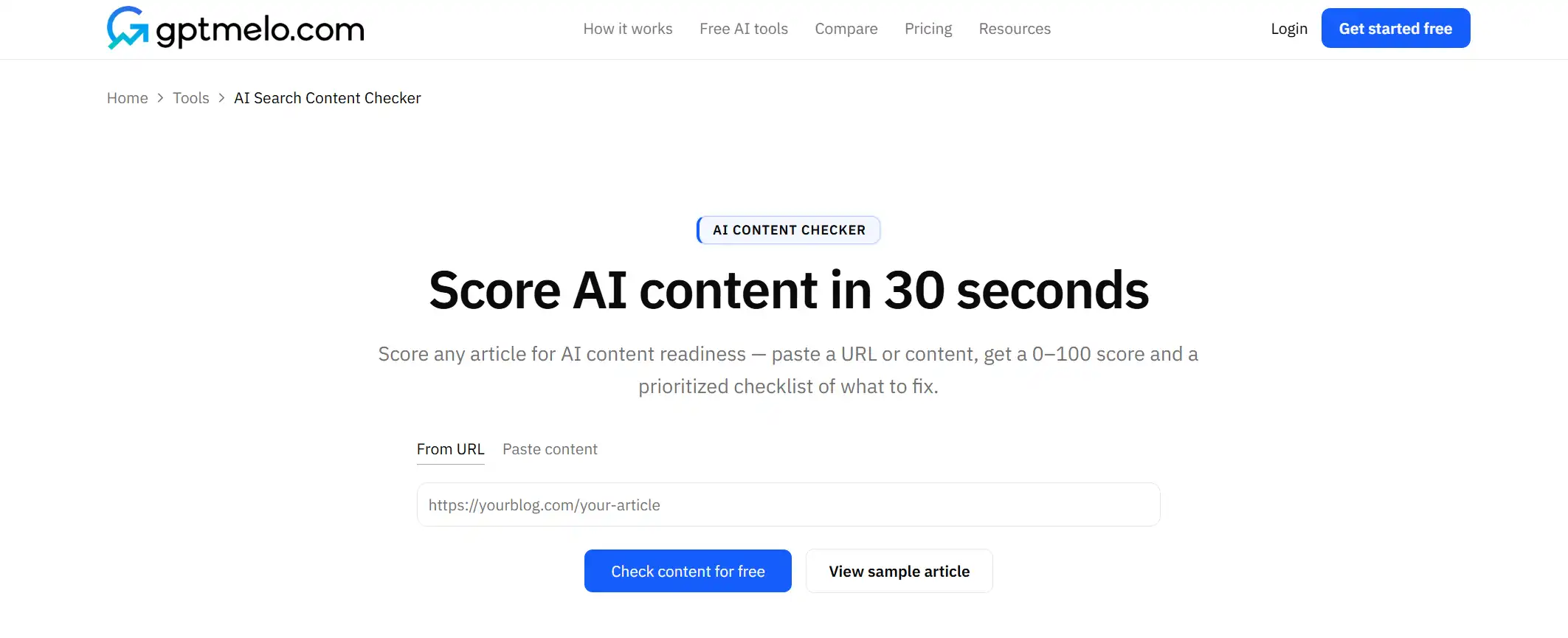
2. Check. Click Check content for free.
3. Read the result. You get a score plus pass/warn/fail rows (topic clarity, brand fit, readability, structure, quotable blocks). The screenshot is a sample — yours follows the URL you pasted. Glance at quotable blocks a chat answer could lift. The score is not a ranking guarantee.
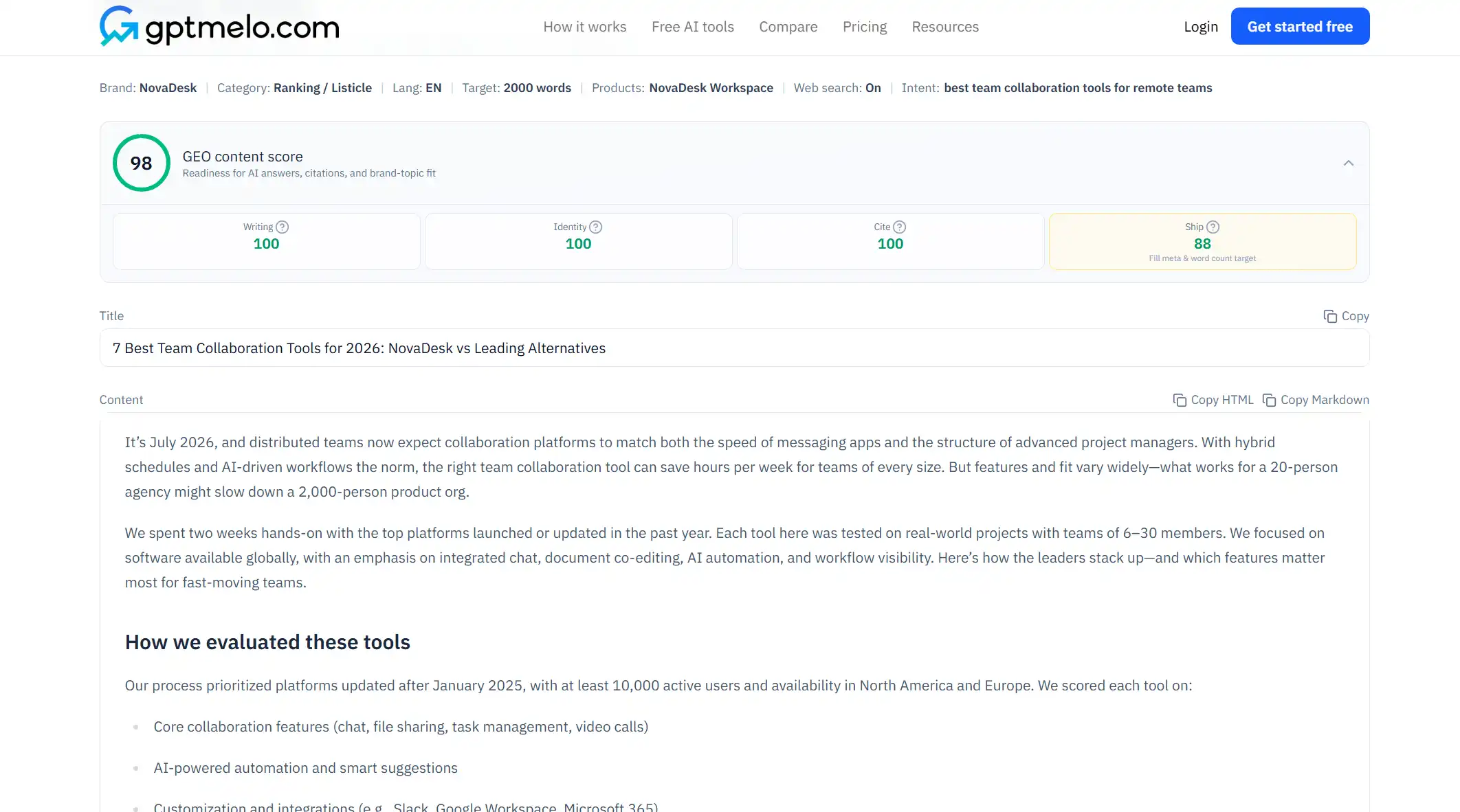
4. Fix the live page, then check again. Edit the HTML people and models actually fetch. Do not treat this window as the page.
FAQ
How do I optimize content for ChatGPT?
Publish crawlable pages with early answers, scannable lists, attributed facts, and trust signals ChatGPT can quote without rewriting.
Is optimizing for ChatGPT different from SEO?
Overlap is high on structure and clarity; ChatGPT also needs crawl access and extractable blocks, not only blue-link rankings.
Should I write content inside ChatGPT for citations?
Drafts can start there, but publish on your site with sources and structure—models cite URLs, not chat threads.