AI Citation 2026: Get Quoted in ChatGPT Answers
Key takeaways
- Citations follow extractable, trusted blocks—not keyword density.
- Track prompts after structure is fixed on priority URLs.
- One page, one primary question answered early.
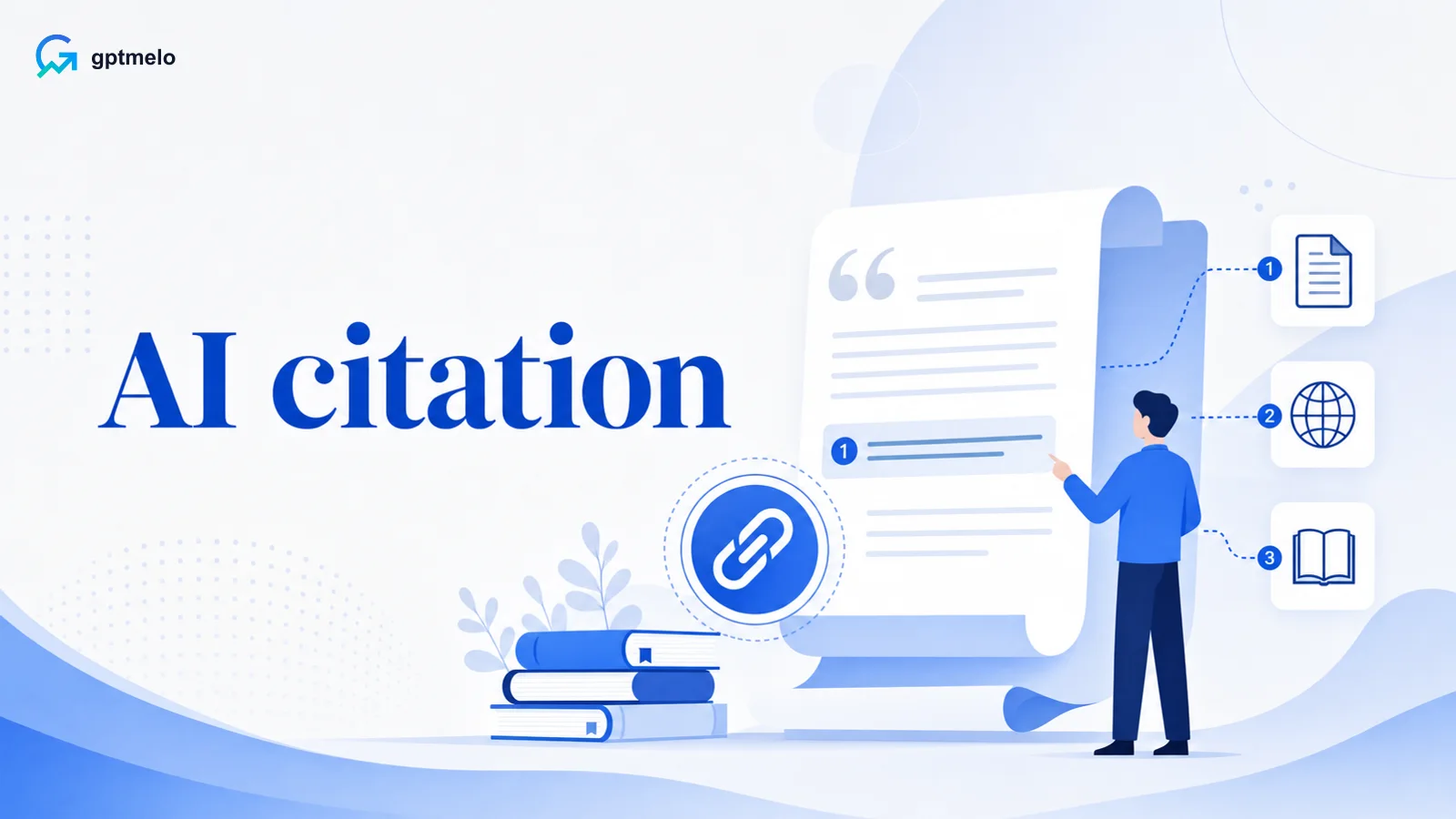
What is AI citation? It is when a model quotes or attributes your page inside an answer—ChatGPT, Perplexity, or similar—instead of only ranking you as a blue link. Keyword density does not earn that slot; extractable answers, sourced facts, and crawlable HTML do.
What AI citation actually looks like
A citation is a visible source chip, a named link, or a paraphrased block that still points back to your URL. Different products display it differently, but the goal is the same: make one clear claim easy to lift without rewriting your whole article.
AI citation is not:
- A guarantee that every prompt will name your brand
- The same metric as organic rank position
- Something a meta tag alone can force
If you want the longer playbook, read get cited by AI and the AI citation framework. This guide is the page-level checklist and free check.
Why structure and trust beat keyword tricks
Models prefer blocks they can lift with low risk: a direct answer in sentence one, a short list or table, and a number with a link. Anonymous bylines and unsourced percentages look weak even when the outline is tidy.
Structure and trust work together:
- Structure — intros that answer early, lists, tables (AI content optimization)
- Trust — named authors, About, primary sources (EEAT checker)
Skipping either one leaves citations on the table.
Step 1: Pick one primary question per URL
Each priority page should own one question in the reader’s words. Put the answer in the first sentence under the title. Later sections deepen that answer—they do not open five competing topics.
Good fits: pricing explainers, comparison tables, how-to guides, definition pages. Poor fits: homepage mashups and tag archives with no single claim.
Match the format to intent using AI-friendly content types—lists and FAQs extract more cleanly than walls of prose.
Step 2: Make quotable blocks visible on the page
Before you run any checker, confirm the HTML shows:
- Sentence-one answer under the H1
- At least one list or table with complete cells
- Stats linked to primary sources (or deleted)
- FAQ answers that match visible copy if you use FAQ schema (schema markup for AI)
If the answer only lives in a PDF or a screenshot, models and checkers both struggle.
Step 3: Score citation readiness on the live URL
Paste the URL into gptmelo’s AI Citation Checker. Fix the biggest gaps first—usually buried intros, missing lists, or unsourced claims.
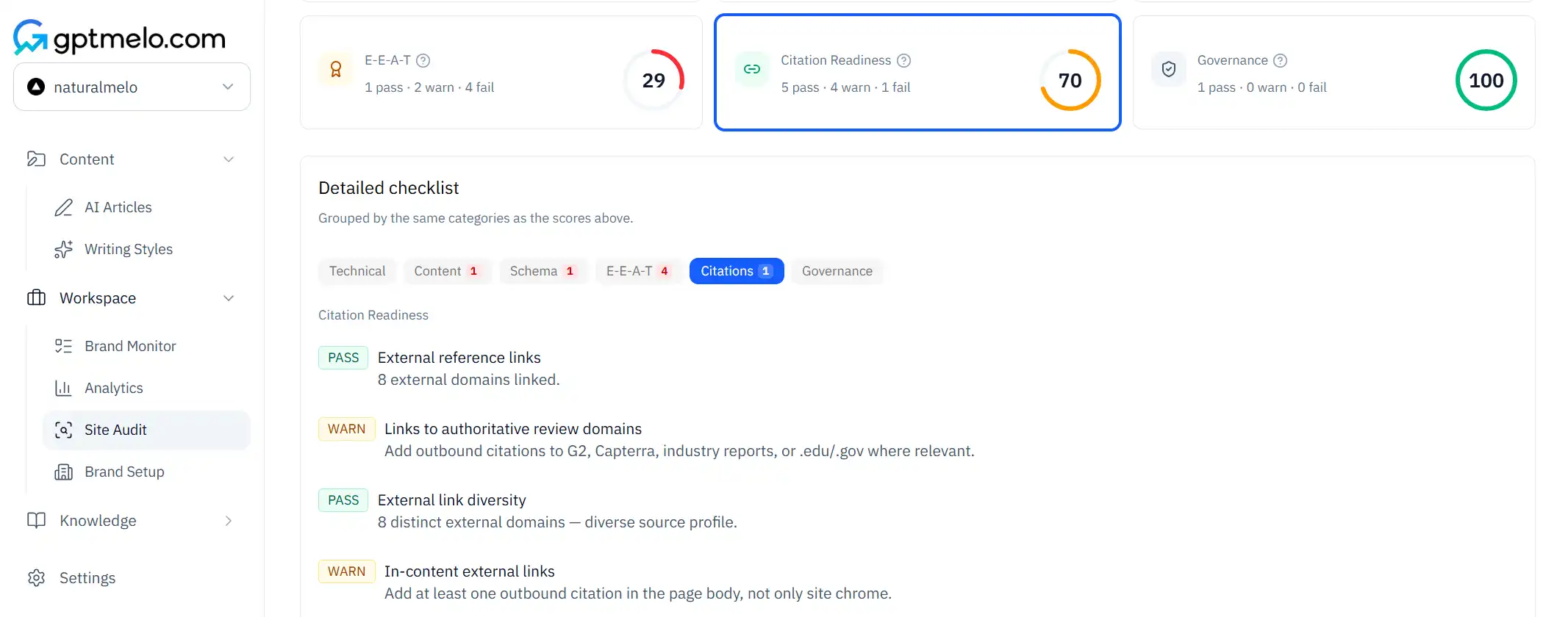
Re-run after template changes. One clean template beats polishing fifty URLs by hand.
Pair structure fixes with crawl access: if GPTBot or other agents cannot fetch the page, citation readiness on staging does not help production (GPTBot robots.txt, XML sitemap checker).
Step 4: Track a small prompt set—after the page is fixed
Do not buy a monitoring suite on day one. After priority URLs look ready:
- Write five to ten prompts your buyers actually ask
- Run them manually in ChatGPT / Perplexity on a schedule
- Log whether your domain appears, which URL, and the date
- Change the page when the answer is wrong—not only when the brand is missing
Paid trackers help when citations are already a reported KPI. Until then, manual checks plus on-page scoring are enough. For how tracked questions fit a product workflow, see ChatGPT diagnostics—as context, not a substitute for fixing HTML.
When to add citation tracking
| Approach | Use when | Skip when |
|---|---|---|
| Manual prompt log | You have under ~20 priority URLs | Nobody will run the prompts twice |
| On-page citation checker | You need a fix list before publish | You only want brand-share dashboards |
| Paid AI monitors | Leadership reports citation share weekly | Structure and crawl access are still broken |
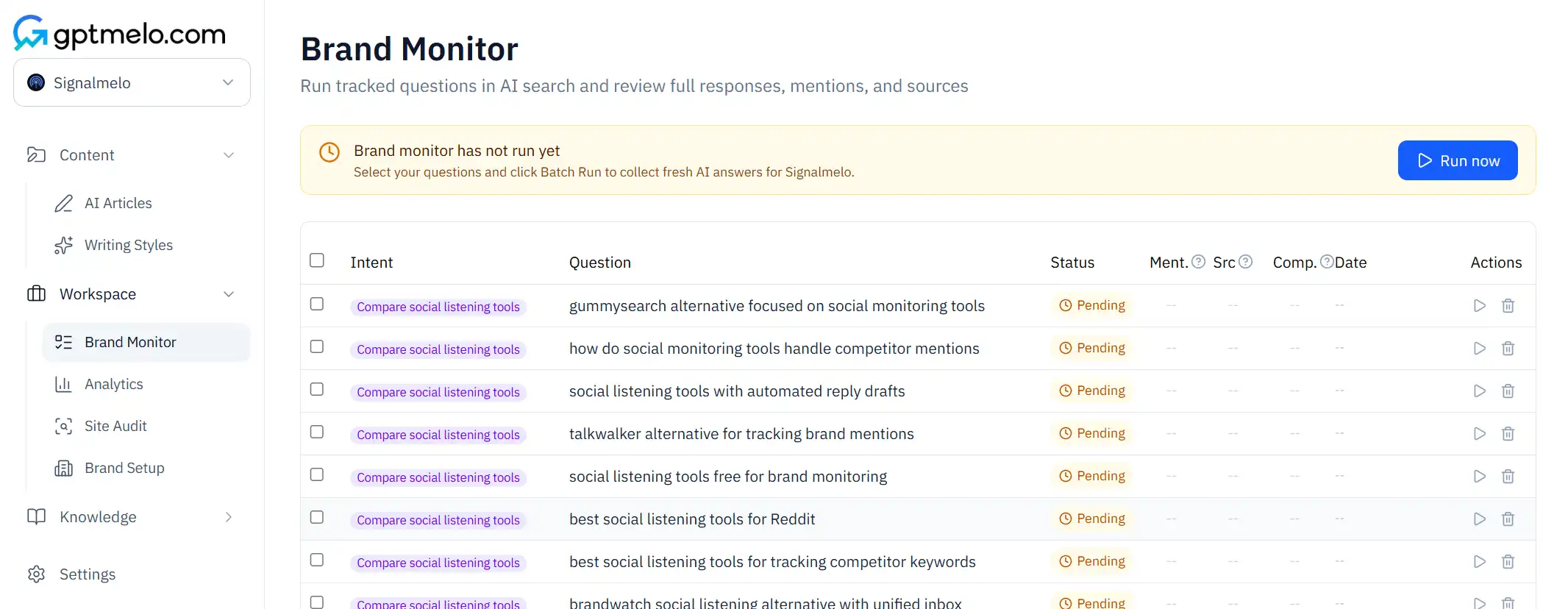
Tools that track “who got cited” answer a different question from tools that score whether your page is ready to be quoted. Run readiness first.
Get cited by ChatGPT without a duplicate page
“How to get cited by ChatGPT” is a common search people type. Treat it as the same checklist—not a separate product category:
- One page answers one ChatGPT-style question in sentence one.
- Include a quotable list or table models can lift.
- Keep the URL crawlable and linked from a sitemap or parent page.
- Score readiness, then ask the live product the same question weekly.
Do not open a second article that only restates this page under a longer title. Put that search wording in H2s and FAQ instead.
Signals that commonly block citations
| Signal | Healthy | Broken |
|---|---|---|
| Intro | Answers the query in sentence one | Long setup history before the claim |
| Blocks | Lists/tables with complete cells | One unbroken essay |
| Sources | Primary links on numbers | “Studies show” with no URL |
| Identity | Named author + About | Anonymous “Team” byline |
| Access | Allowed in robots; in sitemap or linked | Disallowed or orphan URL |
What to do when you are still not cited
After two to four weeks of clean structure:
- Compare your answer to whoever is cited—do they have a tighter first sentence or a clearer table?
- Confirm the URL returns 200 for anonymous visitors (no soft login wall).
- Check whether another page on your own site is competing for the same question—consolidate.
- Keep measuring the same prompts; rotating questions every week hides progress.
If the page fails readiness, fix that before you interpret “not cited” as a monitoring problem.
From draft to publish
- Choose one primary question for the URL.
- Write the answer early; add list or table blocks.
- Source every number you keep.
- Check citation readiness with the AI Citation Checker from Step 3.
- Confirm crawl access and trust signals.
- Log a few prompts after deploy; revisit weekly.
Skipping step 4 is how teams ship “GEO content” that still never appears in answers.
Common mistakes
- Optimizing for keyword density while the intro never answers the question.
- Expecting citations from pages blocked in robots.txt.
- Measuring brand monitors before fixing structure.
- Stuffing FAQ schema that does not match visible HTML.
- Publishing ten thin posts instead of one quotable page per question.
- Treating citation as a one-week campaign instead of fixing pages, re-checking, and measuring the same prompts over time.
Free check: a page you want quoted
Open gptmelo’s AI Citation Checker. Paste the live URL of a page you want quoted. No account required.
1. Fill the form. Paste that page URL in the URL field.
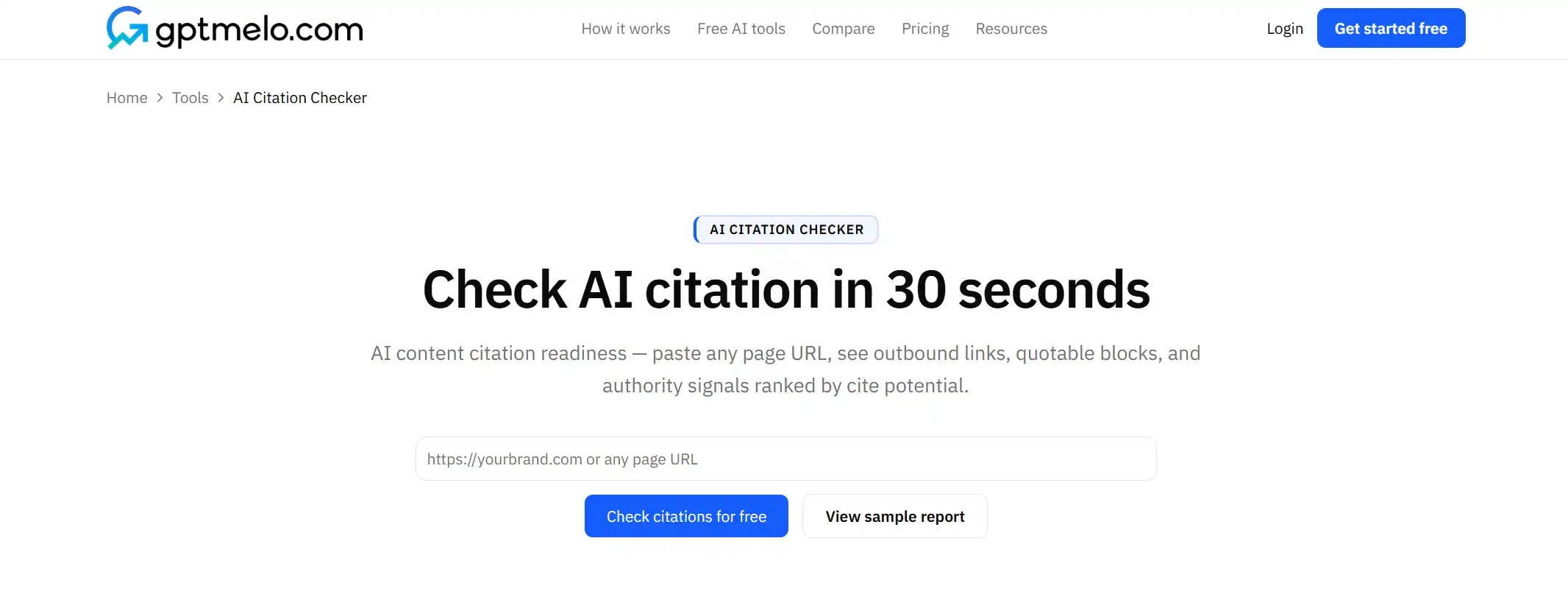
2. Check. Click Check citations for free.
3. Read the result. You get a score and a checklist (outbound links, quotable blocks, attribution). The screenshot is a sample — yours follows the URL you pasted. Glance at quotable blocks. This check does not report whether ChatGPT already cited you.
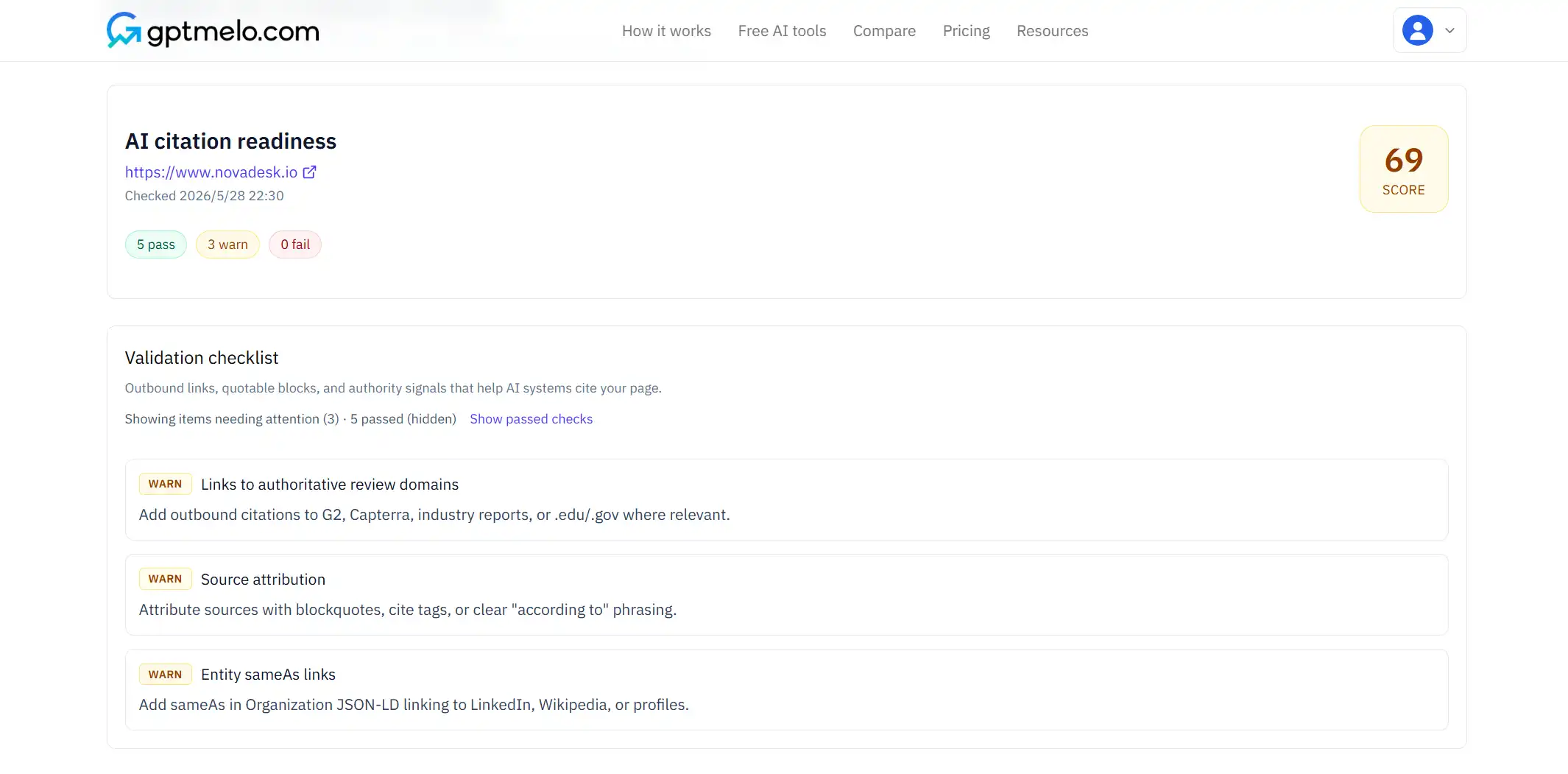
4. Fix the live page. Edit the HTML, then paste the same URL again. Do not treat this window as the published page.
FAQ
How do I get cited by ChatGPT?
Publish clear, sourced answers on crawlable pages with strong structure and trust signals—then check citation readiness before you scale volume.
Can I track AI citations for free?
Start with manual prompt checks and on-page citation readiness scoring before you buy a paid monitor.
How long until citations show up?
It varies by crawl frequency and competition. Fix structure and access first, then measure the same prompts over weeks.