AI Content Citation Tracking Tools: Free Checks Before Paid Monitors
Key takeaways
- Fix extractable structure before you buy citation dashboards.
- Free checks catch missing answers, lists, and trust gaps on the URL.
- Paid monitors help when citations are already a KPI.
Classic SEO suites count blue links; AI content citation tracking tools ask a different question—will an assistant quote your page, and can you see when that happens? Start with free on-page readiness. Buy dashboards after priority URLs already earn extractable answers. The AI citation guide teaches the craft; this page is the tool shortlist by job.
| Job | I’d start here | Skip if |
|---|---|---|
| Know if a URL is ready for citation | Free on-page citation / structure check | You have not published the page yet |
| Catch missing lists, FAQ, or sources | Content structure checker | You only want a brand-mention graph |
| See whether ChatGPT mentions you | Manual prompt set + notes | You need daily coverage across hundreds of prompts |
| Recurring share-of-answer KPI | Paid citation / brand monitor | Structure on flagship URLs still fails basic checks |
| Pick a stack for a small team | Free checks first, one monitor later | You budget for six overlapping dashboards |
What “citation tracking” actually covers
Two jobs get mixed in sales pages:
- Readiness — Is this URL structured and trusted enough to quote?
- Monitoring — Did AI answers mention your brand, product, or URL over time?
Readiness tools score the page you control. Monitoring tools sample prompts and answers you do not fully control. Most teams need readiness first; monitoring without extractable pages produces empty graphs.
If a vendor demo jumps straight to share-of-answer charts, ask how they score your URLs. A pretty graph over thin pages is still a thin-page problem.
Free checks that catch readiness gaps
Before you pay for tracking volume, run:
- Citation readiness — gptmelo’s AI Citation Checker on the priority URL
- Structure — intro answer, lists, tables (AI content optimization if you need the full system)
- Crawl access — robots and sitemap so assistants can fetch what you published
- Manual prompts — five to ten real questions your buyers ask; note whether you appear and which URL gets credited
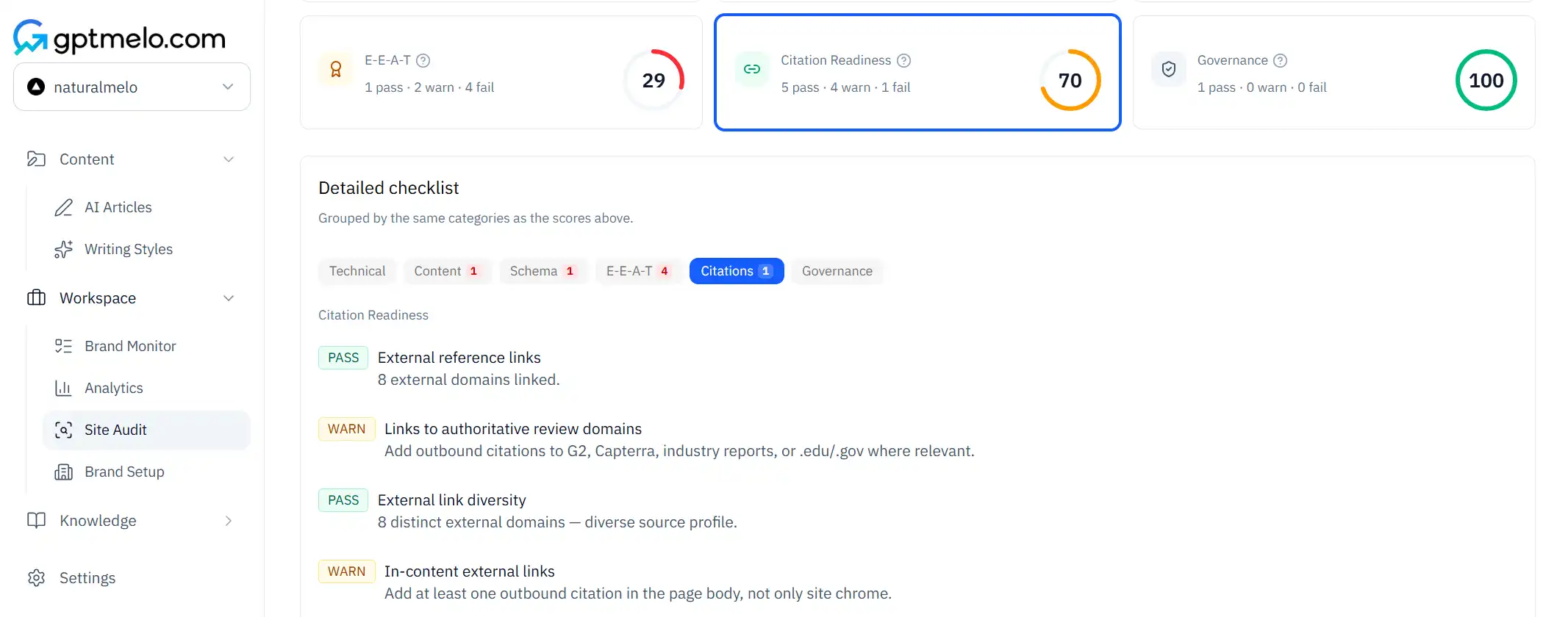
That loop costs little and fails fast. The get cited by AI resource covers governance; keep this article on which tool to open when.
A one-hour readiness check
- Pick one revenue or support URL—not your whole blog archive.
- Run the citation readiness check; write down the top three fails.
- Fix the intro and one list or table in the same sitting.
- Ask ChatGPT or Perplexity three buyer questions; note brand, URL, and whether the answer invents facts you never published.
- Only if the page passes readiness and you still need recurring coverage, shortlist a paid monitor.
Do not start at step five. Empty dashboards feel busy and change nothing on the page.
When paid citation monitors earn the seat
Paid monitors help when:
- Citations are already a quarterly KPI
- You need scheduled prompt coverage across brands or locales
- Several stakeholders need a shared dashboard—not a spreadsheet of screenshots
They do not fix thin intros, empty tables, or pages blocked by robots. If readiness fails, monitoring only documents the miss.
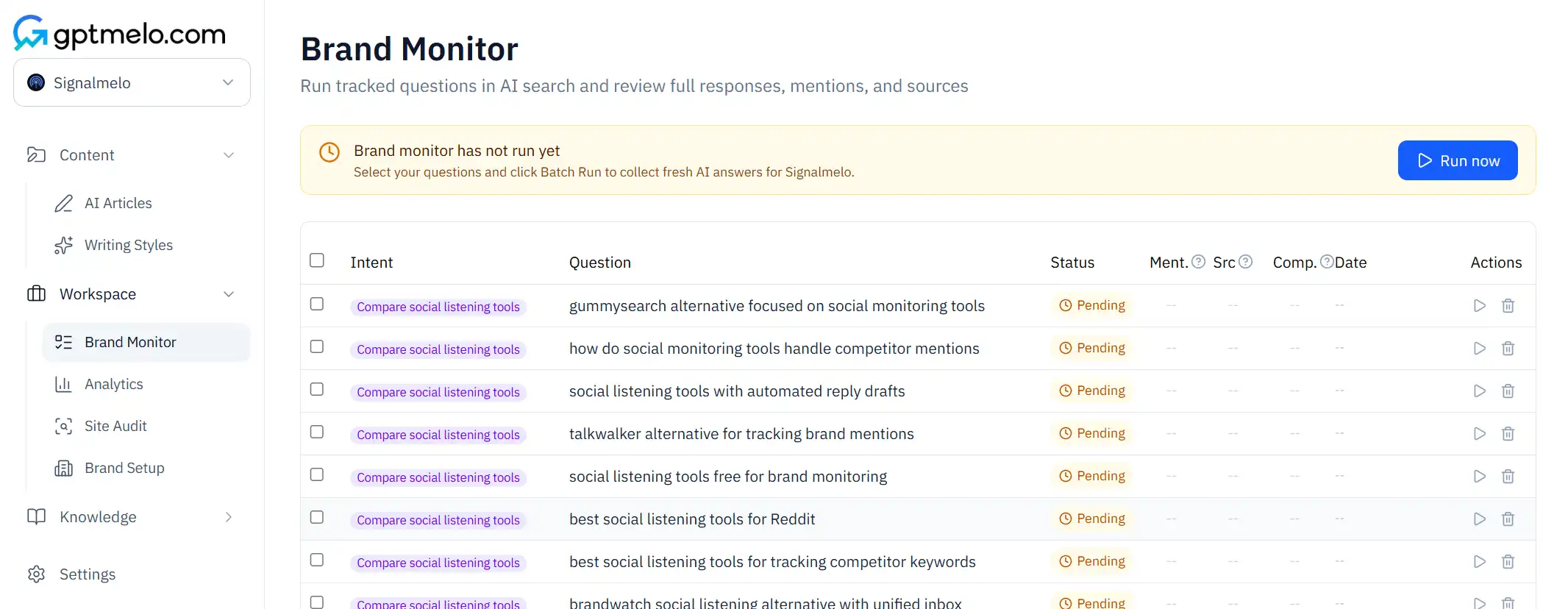
When you compare paid writing or SEO suites for briefs at scale, use a competitor moment like gptmelo vs Surfer—not as your citation monitor. For assistant-side diagnostics in the product workflow, see ChatGPT diagnostics.
How to shortlist without overlapping tools
| Gap you see | Tool type | Wrong buy |
|---|---|---|
| Weak intro / no lists | Structure or citation readiness check | Enterprise monitor |
| Schema ≠ HTML | Structured data validator | Another writing assistant |
| Page never fetched | Crawler / sitemap check | Citation share dashboard |
| Ready pages, no visibility into answers | Prompt monitor | Fifth free checker you ignore |
Prefer one tool per gap. The broader free stack sits in AI search optimization tools; this page stays on citation tracking.
What to ask a vendor before you buy
- Which assistants and markets are sampled?
- How often do prompts refresh?
- Can you export raw answers, or only scores?
- Does the product score your URLs for readiness, or only mention graphs?
If the answer is “graphs only,” keep a free readiness check in the weekly workflow anyway.
Measure without fake lift percentages
Track what you control:
- Priority URLs pass citation readiness
- Manual prompt notes show a named URL when you are cited
- Template fixes ship before the next publish round
Optional downstream metrics (branded queries, referral patterns) vary by analytics setup—treat them as directional. The AI citation framework is the evergreen handoff when you need process docs beyond tools.
Skip invented “+40% AI traffic” claims in internal decks. Operators trust pass rates and prompt notes more than unverifiable lift slides. Revisit the same five buyer prompts after each template fix so you can tell whether structure changes moved the answer—not only the score.
Common mistakes
- Buying a monitor before one flagship URL passes a readiness check.
- Treating detector-style scores or SEO greens as citation proof.
- Running fifty prompts once, never re-testing after template fixes.
- Pitching Peec/Otterly-style monitoring as the whole GEO story while pages stay unquotable.
- Dumping six tool logos in a footer instead of matching one gap to one check.
Free check: readiness before a paid monitor
Open the AI Citation Checker. Paste a live URL before you buy a mention dashboard. No account required.
1. Fill the form. Paste the priority page URL in the URL field.
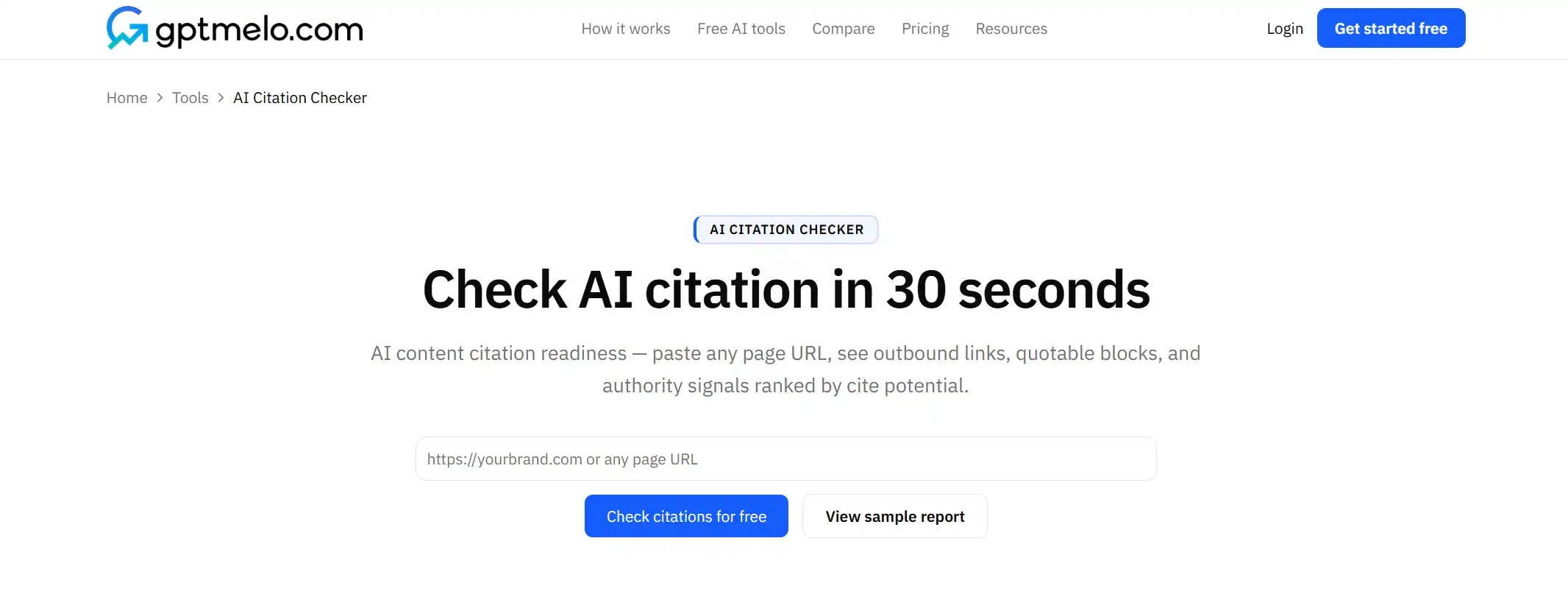
2. Check. Click Check citations for free.
3. Read the result. You get a score and a checklist (outbound links, quotable blocks, attribution). The screenshot is a sample — yours follows the URL you pasted. Glance at outbound links and unsourced facts. This is readiness on your HTML—not a dashboard of whether ChatGPT already named you.
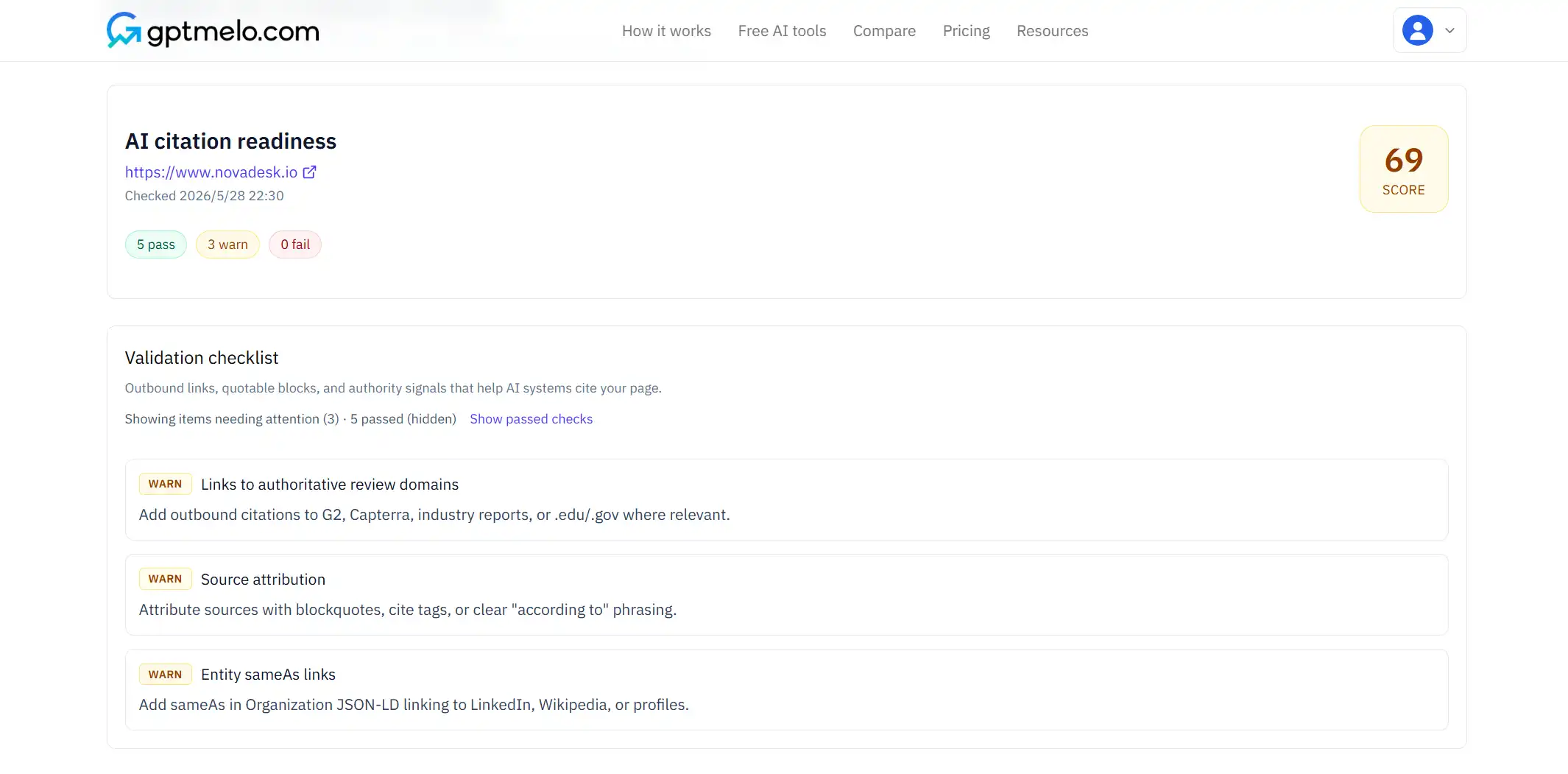
4. Fix the live page. Edit the HTML, then paste the same URL again. Do not treat this window as the published page—or as a citation tracker.
FAQ
What are AI content citation tracking tools?
Tools that score whether a page is ready for citation and/or monitor whether AI answers mention your brand or URL over time.
Do I need a paid AI citation monitor first?
Usually no—fix on-page readiness on priority URLs, then add monitoring when you need recurring prompt coverage.
Can I track ChatGPT citations for free?
Start with manual prompts plus an on-page citation readiness check; paid tools automate volume later.