AI-Driven Content Optimization: Score the Draft Before You Ship
Key takeaways
- AI drafts need a human fact-check and a structure score.
- Optimize the template, not one heroic essay.
- Writer + checker beats drafting without a check.
AI-driven content optimization is not drafting without a check. It is draft with AI, fact-check the claims, score structure and trust, then ship the URL. The goal is a page ready for citation—not a longer chat transcript. For ChatGPT outline habits, see ChatGPT for content generation; for on-page structure rules, see AI content optimization.
| Situation | I’d start here | Skip if |
|---|---|---|
| New draft from a model | Outline with answer blocks first | You paste one long essay prompt |
| Refresh of an old URL | Diff facts and dates, then re-score | You only swap synonyms |
| Template at scale | One URL through draft, score, and ship | Fifty AI drafts unpublished |
| Team handoff | Checker failure list + required CMS blocks | Editors guess the structure each time |
| Readability pass | Edit for clarity after facts are solid | You chase detector games instead of sources |
What AI-driven optimization includes
- Brief — query, audience, required blocks (intro answer, list or table, source line)
- Draft — AI fills the outline; humans own facts
- Edit — cut filler, add attribution, fix inventiveness
- Score — structure / GEO check on text or URL
- Ship — publish crawlable HTML; re-score after CMS quirks
Skip any step and you get fluent pages that still extract poorly: they sound fine and fail the structure check.
Draft with blocks in the brief
Tell the model the shape up front:
- Sentence-one answer for the primary query
- H2 list that matches the outline
- Where a table or numbered steps must appear
- Which claims need a named source
Do not ask for “2,000 words on AI SEO” and expect extractable structure. Put the blocks in the brief. Sample prompts belong in a table or blockquote for editors—not as a publish promise.
| Brief field | Example |
|---|---|
| Primary query | how to structure a pricing page for AI answers |
| Intro answer | one sentence with plan price and who it fits |
| Required block | three-row table: plan / price / seats |
| Source rule | no percentages without a named source |
Fact-check before polish
Models invent confident numbers. Editors should:
- Delete unsourced statistics
- Date pricing and limits when they change
- Replace vague “experts say” with named docs or drop the claim
- Keep brand and product names consistent
Readability passes come after facts. Do not “humanize” a lie into a smoother lie. Team edit habits: edit AI content.
Score with a checker, not guesswork
Paste the draft or live URL into a structure check. gptmelo’s writer workflow pairs with the content checker in the same loop—start drafting in the GEO Content Writer, then score before publish. Typical fails on AI drafts: vague intros, missing lists, tables with empty cells, FAQ only in JS.
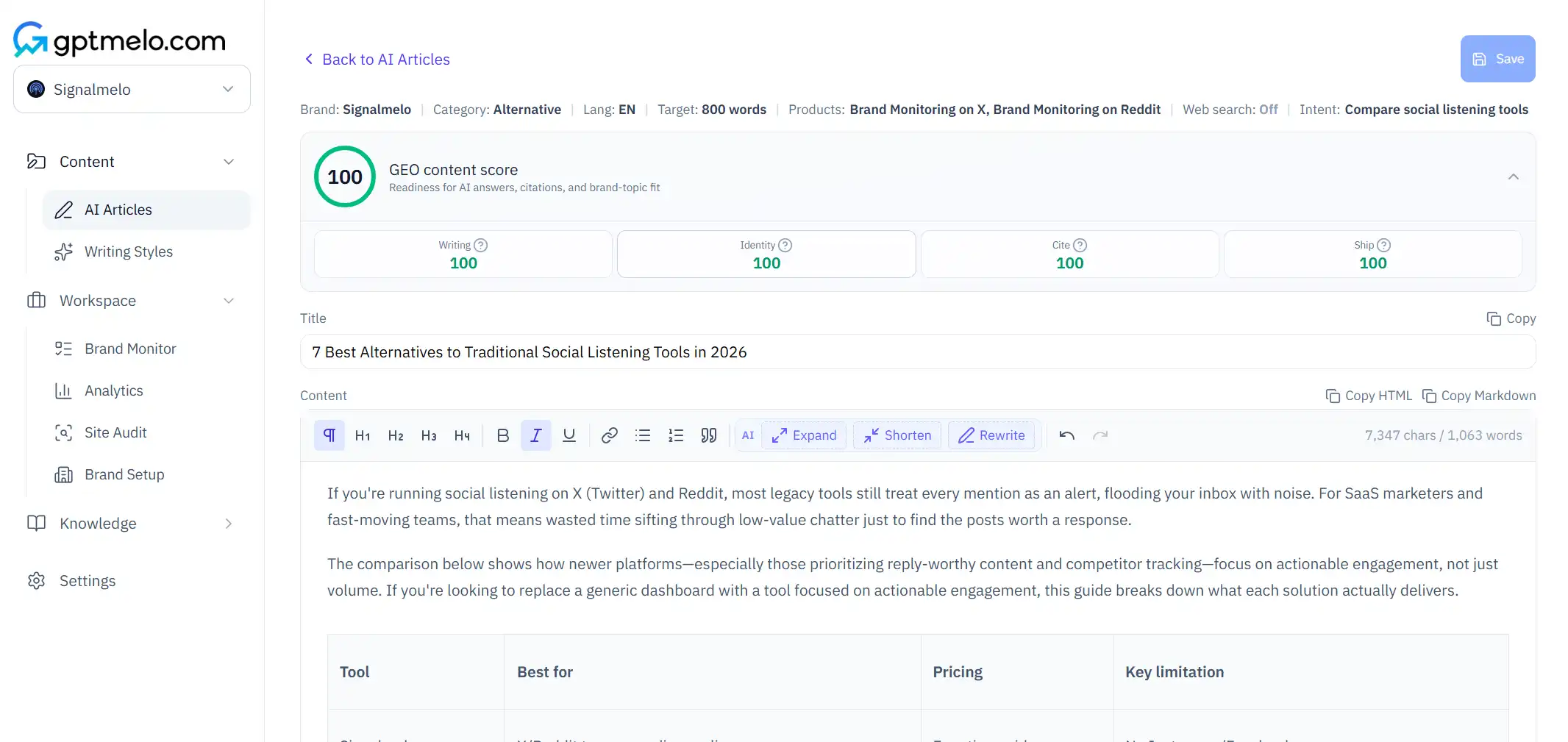
Product loop: how GEO article writing works.
Optimize templates, not hero essays
The ROI is a product, comparison, or glossary template that passes—then every new page inherits the blocks. One perfect blog post with fifty broken SKUs is an empty win.
Workflow:
- Pick the URL type that drives revenue or tickets.
- Draft, edit, and score until it passes.
- Document required CMS fields.
- Re-score after theme or plugin releases.
Put the required fields in the CMS UI if you can—intro answer, list or table, source line—so writers cannot skip the shape. AI makes drafting faster; it does not excuse missing blocks. If legal review slows shipping, run the structure check on the pre-legal draft and again after edits so counsel changes do not silently remove the answer sentence.
Train new editors on one reference URL that already passes. Cloning a failing AI draft teaches the wrong default. When the model invents a competitor price, delete it; do not “style” the fiction into smoother prose.
Keep detector-style scores out of the publish criteria. Readability helps humans; sources and structure help citations. Chasing “sounds less AI” without facts is the wrong optimization target for this workflow.
Ship criteria before you scale the template
Before you clone the template across a product line, write the ship bar in one place editors can see:
- Intro answers the primary query in the first sentence
- Required list or table is present and complete
- Every hard number has a named source or is deleted
- Structure check passes on the live URL after CMS render
- FAQ HTML matches schema when the page uses FAQ markup
Wrong fit: a green draft score on paste while the published page still hides headings in a widget. Always re-score the URL you ship, not only the Google Doc. If legal cuts the answer sentence, restore a shorter claim that still stands alone—do not leave the page opening with setup fluff.
I’d start with three sample URLs in the same template family. When all three pass the same bar, document the CMS fields and only then open the batch. Skip if writers still invent a new outline each sprint; fix the brief and the required blocks first. AI-driven optimization scales the shape you proved, not the volume of chat transcripts sitting in a shared drive.
Common mistakes
- Publishing the first AI draft without a fact-check.
- Measuring success by word count or “AI score” greens alone.
- Chasing detector scores instead of sources and structure.
- Letting every writer invent a new outline shape.
- Skipping the re-check after the CMS mangles headings.
Free check: the page before it goes live
Open the GEO Content Writer. Draft the page about to ship — not a generic essay. No account required.
1. Fill the form. Topic is that URL: how to structure a pricing page for AI answers; sentence one names plan price and who it fits; a three-row table of plan / price / seats; no unsourced percentages. Brand name and Brand website are the product on the pricing page you are about to publish. Open More options only if you need them.
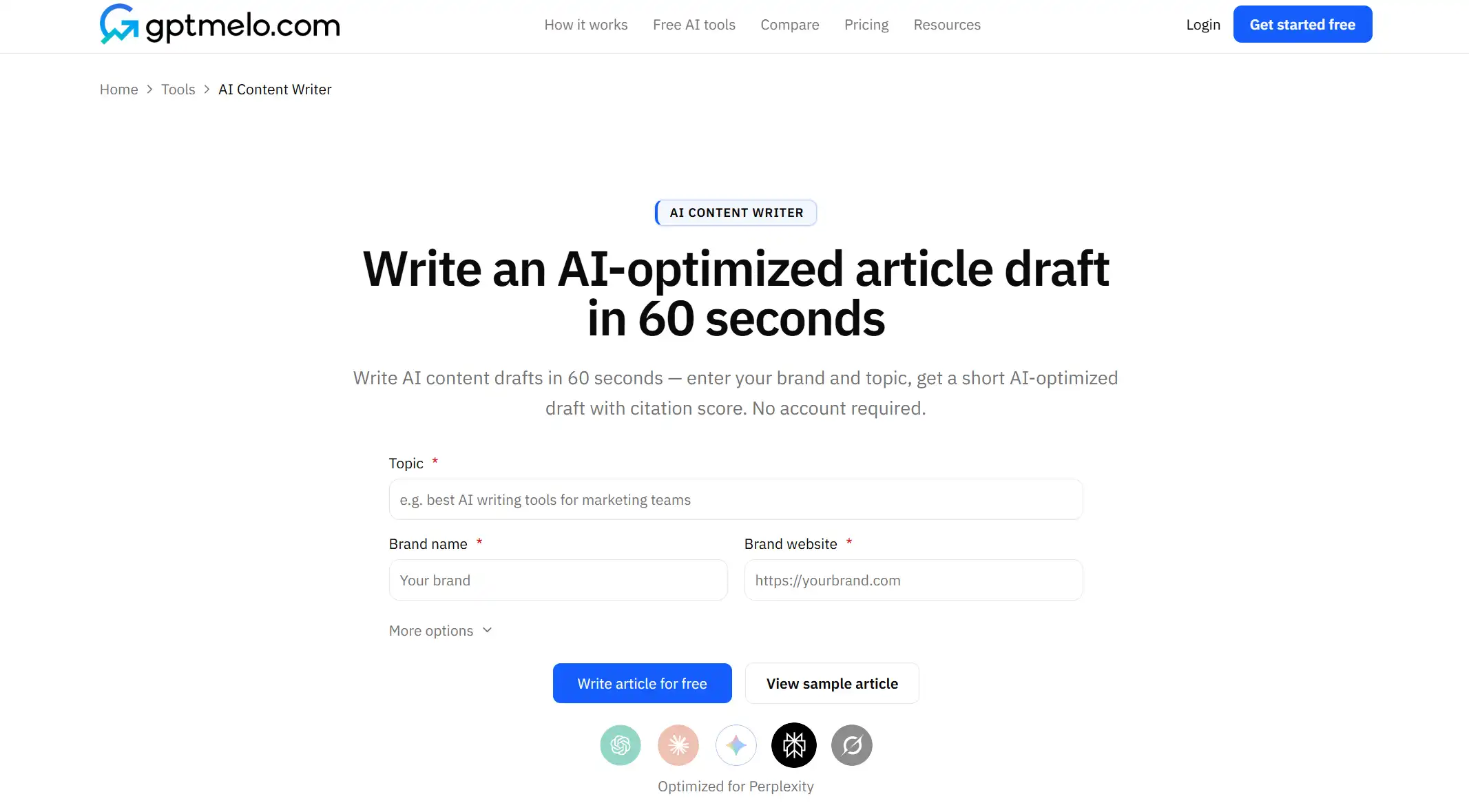
2. Write. Click Write article for free.
3. Read the result. You get a draft next to a GEO content score (Writing, Identity, Cite, Ship). The screenshot is a sample — yours follows Topic. Glance at Ship: is this still that pricing page, or did it wander into a think piece? Use Copy HTML or Copy Markdown. The score is not a fact check.
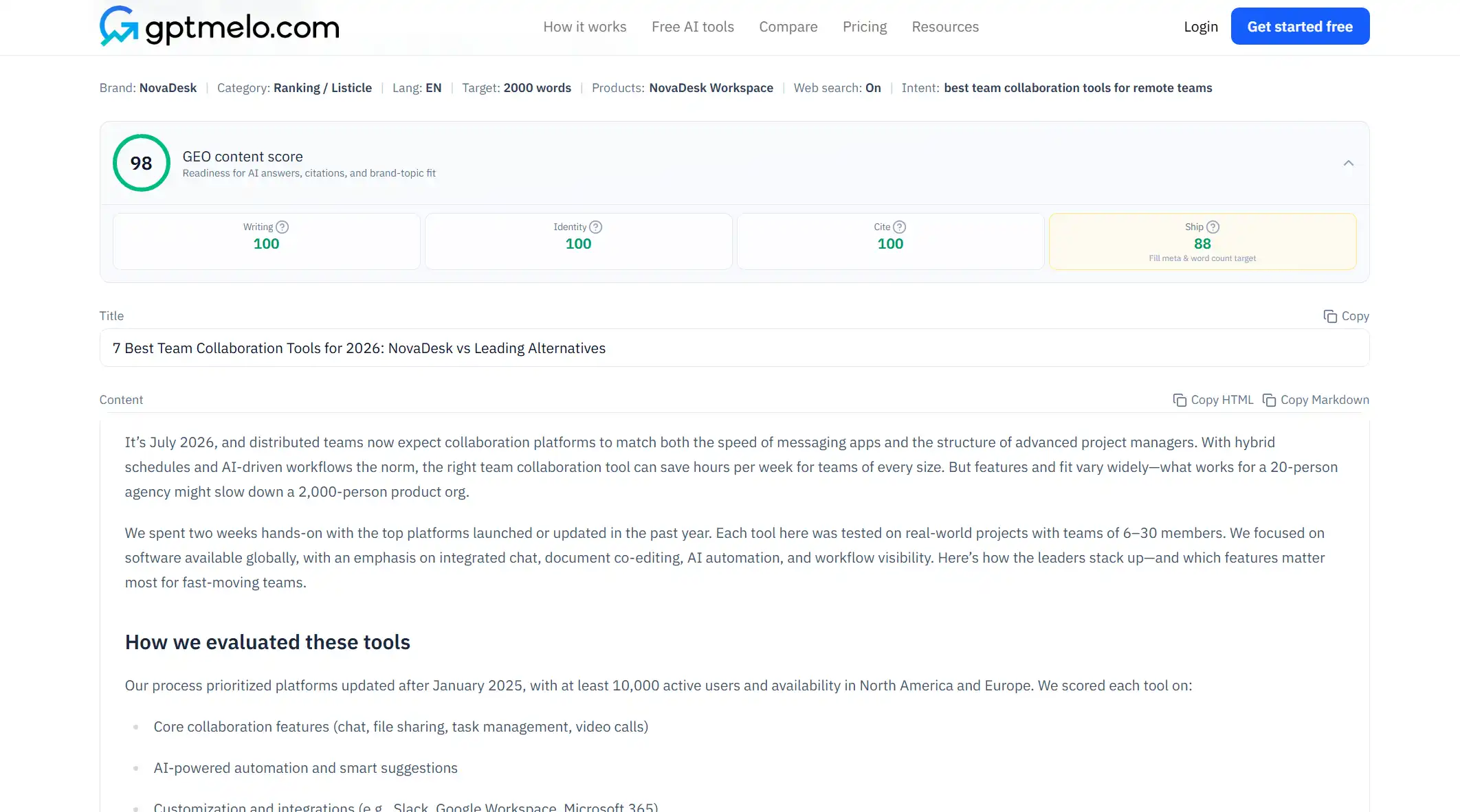
4. Edit, then put it on a URL. Read the draft before anyone else sees it. Do not treat this window as the live page.
The write-check-publish path is in GEO article writing.
FAQ
What is AI-driven content optimization?
Using AI to draft or refresh pages, then scoring structure, sources, and trust so the published URL is ready for citation.
Should I publish AI drafts without editing?
No. Fix facts, add sources, and run a structure check before the page goes live.
Which tool should I use first?
Draft with a content writer workflow, then score the URL or text with a GEO content checker.