AI Search Visibility Optimization Tools: Checks by Gap
Key takeaways
- Visibility tools should map to a gap: structure, crawl, schema, or monitoring.
- Free checkers fix most pre-publish misses.
- Dashboards help after pages already pass readiness checks.
AI search visibility optimization tools should map to a gap—weak structure, broken crawl, schema drift, or missing answer monitoring—not to the longest logo row. Free checks fix most pre-publish misses. Dashboards earn a seat after priority URLs already pass readiness. For content-optimization picks, see best AI content optimization tools; for the broader free stack, see AI search optimization tools.
| Job | I’d start here | Skip if |
|---|---|---|
| Weak intros / no lists | Free structure / GEO content check | You only want rank tracking |
| Pages never fetched | Sitemap + crawler / robots check | Content is fine but Disallowed |
| FAQ markup wrong | Structured data validator | Schema already matches HTML |
| Recurring citation KPI | Paid monitor after readiness | Flagship URLs still fail free checks |
| Exec dashboard later | Visibility product workflow | You have no pass-rate baseline |
Visibility is a stack, not one score
Think in layers:
- Discover — crawlers can fetch the URL
- Extract — answers, lists, tables are liftable
- Trust — sources and author signals where needed
- Observe — optional monitoring of answers over time
A tool that only does (4) cannot fix (1)–(3). Buy in that order.
Free tools by gap
| Gap | Free check type | Typical fix |
|---|---|---|
| Structure | GEO / content structure check | Rewrite intro; add list/table |
| Citation readiness | Citation checker | Quotable blocks + trust |
| Schema | Structured data checker | Align FAQ HTML and JSON-LD |
| Crawl | Sitemap / crawler checker | Fix robots, orphans, lastmod |
Start with gptmelo’s GEO Content Checker on one priority URL. Add crawl or schema tools when the fail pattern points there—not because a vendor demo showed a heatmap.
When dashboards and monitors help
Paid visibility and brand monitors help when:
- Citations are a quarterly KPI
- You need scheduled prompts across brands or locales
- Stakeholders need a shared view—not a private spreadsheet
They do not replace empty tables or blocked robots. For product-side visibility workflow, see AI visibility dashboard. Market framing lives in the GEO tools benchmark when you need a longer comparison narrative.
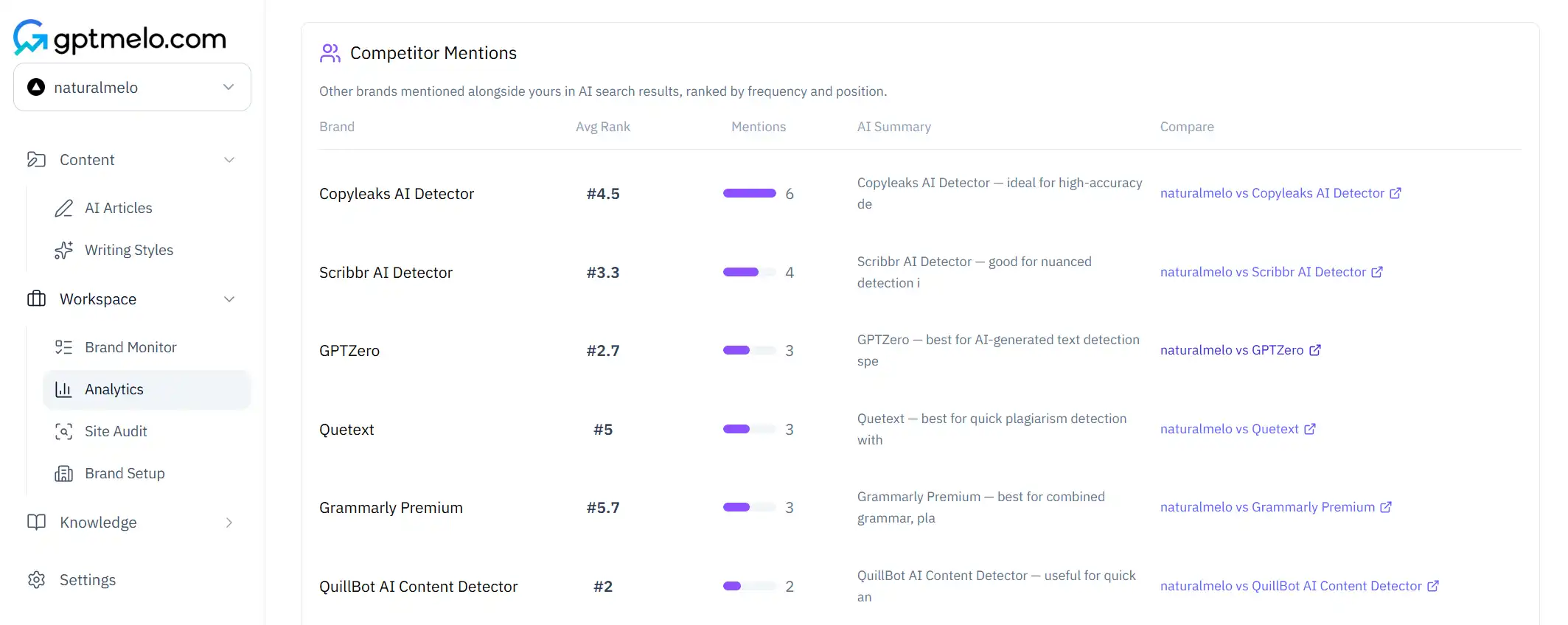
Shortlist without overlapping tools
Prefer one primary tool per gap. Wrong buys:
- Enterprise monitor before one template passes structure
- Sixth free checker you never open
- Writing assistant sold as a crawl fix
If two tools score the same structure job, keep the one your editors actually run weekly.
Weekly rhythm that compounds
- Export fails from the structure check.
- Ship one template fix mid-week.
- Re-score Friday.
- Only then open a monitor or suite ticket if observation is still the bottleneck.
That rhythm beats a quarterly vendor comparison with no fixed URL. Visibility improves when pass rates rise—not when the slide gains another logo.
Name an owner for the checker failure list. Tools without owners become shelfware. If engineering and content disagree about crawl vs copy, use the gap table above: robots and sitemap fails are engineering; intro and list fails are editorial; schema drift is usually shared.
When you add a paid monitor, keep the free structure check in the weekly cadence. Monitors explain whether answers mention you; they do not rewrite your H2s. Pair observation with a fixed prompt set so week-over-week notes stay comparable.
For teams that already run the broader free stack, treat this page as the next-gap guide—not a second roundup that repeats every tool blurb from AI search optimization tools. One gap, one next check, one owner.
How to pick the next tool by gap
When the weekly structure check is green and discovery is clean, the next buy is still a gap decision—not a feature-list comparison.
Ask three questions out loud:
- Do we need scheduled prompts and brand share, or do we still invent answers on flagship URLs?
- Is schema drifting after CMS releases, or is crawl the recurring miss?
- Who owns the fix after the tool emails a fail?
If the answer to (1) is inventing answers, stay on free structure and trust checks. If schema drifts weekly, prioritize a structured data validator and a CMS owner—not another monitor. If crawl fails recur, fix robots and sitemap before you compare dashboard logos.
I’d start with a one-page decision note: gap, tool type, owner, review date. Skip if nobody will open the tool on Friday. Shelfware is the default outcome of buying without a named checker failure list. Visibility optimization tools earn their seat when they change what you ship next week—not when another logo lands on a slide for budget approval.
Revisit the shortlist every quarter with the same question: which gap still burns tickets? Drop tools that no longer map to a live fail pattern. Keep free structure checks even after you add a paid monitor—observation without a rewritable template turns into expensive screenshots. When a new CMS theme ships, run crawl and schema checks before you blame the writing stack; many “visibility drops” are discovery or markup regressions, not missing dashboards.
Common mistakes
- Buying monitors to explain why thin pages are never cited.
- Treating one Overview appearance as a durable visibility win.
- Running crawl, schema, and structure tools with no owner for fixes.
- Comparing dashboards before scoring your own template.
- Ignoring robots blocks while polishing prose.
Free check: the gap you picked
Open the GEO Content Checker. Paste the URL that matches the job table — the gap you picked, not a random homepage. No account required.
1. Fill the form. Keep From URL selected and paste that live page. Switch to Paste content only if fetch is blocked.
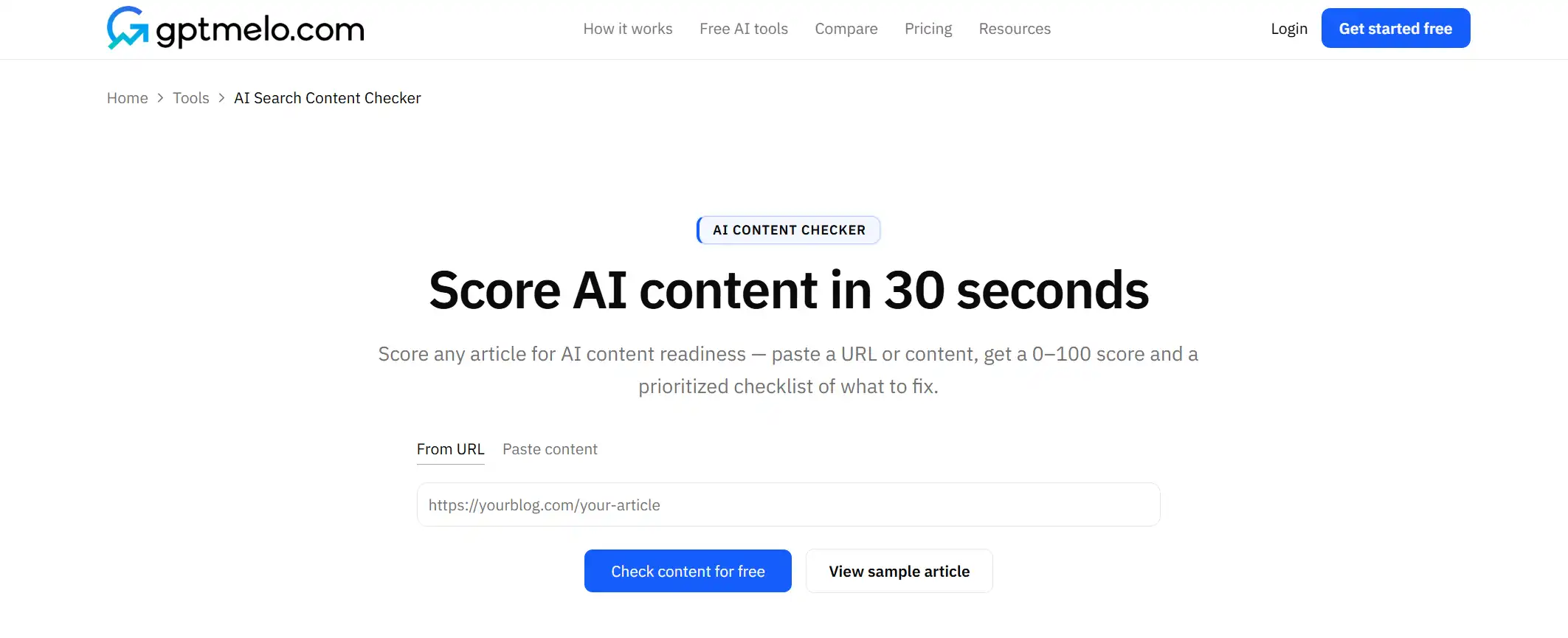
2. Check. Click Check content for free.
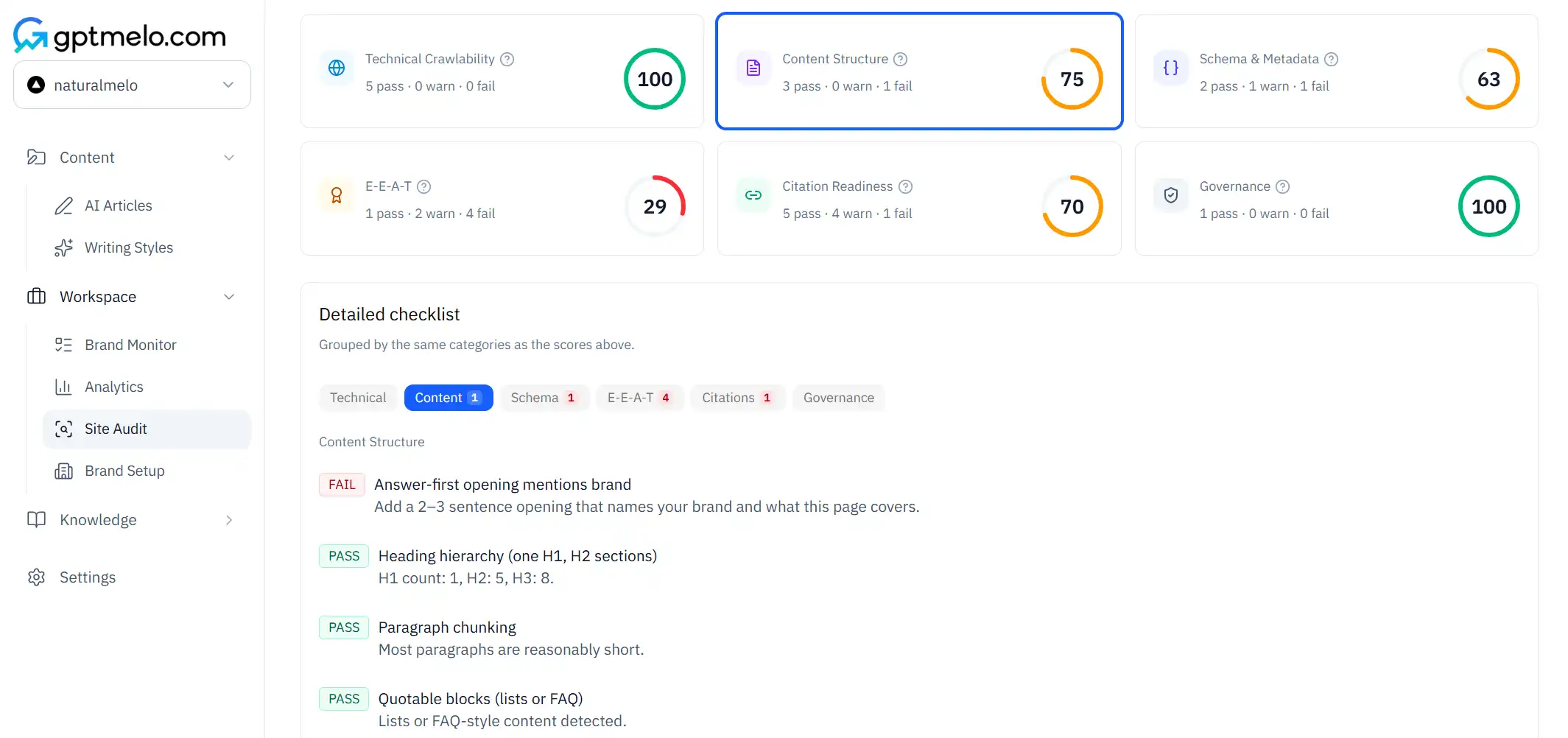
3. Read the result. You get a score plus pass/warn/fail rows (topic clarity, brand fit, readability, structure, quotable blocks). The screenshot is a sample — yours follows the URL you pasted. Glance at the row that matches that gap. The score is not a ranking guarantee.
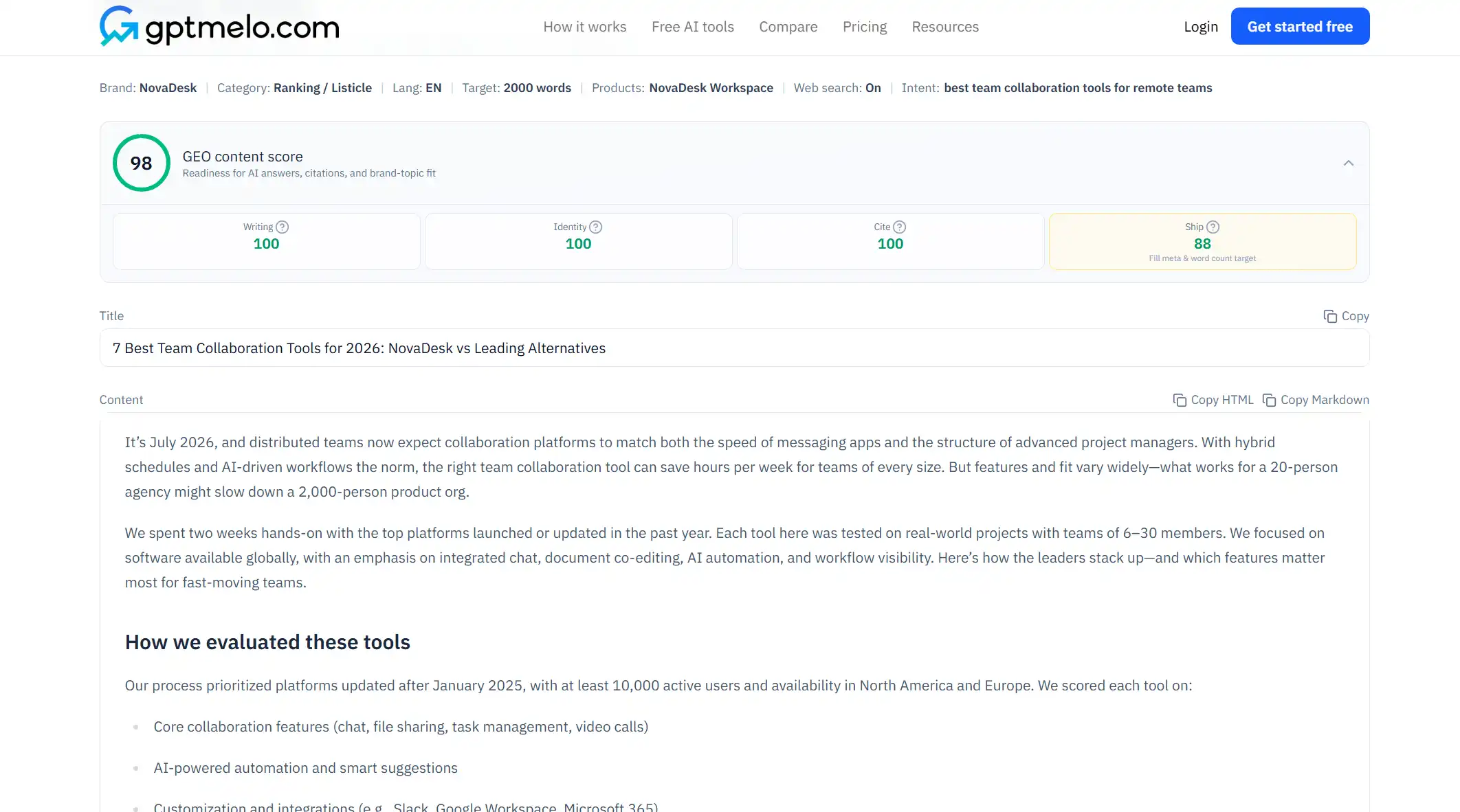
4. Fix the live page, then check again. Edit the HTML people and models actually fetch. Do not treat this window as the page.
FAQ
What are AI search visibility optimization tools?
Checks and monitors that help pages get discovered and quoted in AI answers—structure scorers, crawler tests, schema validators, and optional brand monitors.
Which visibility tool should I run first?
A content structure check on one priority URL, then crawler/sitemap and schema if discovery or markup is broken.
Are brand monitors required for AI visibility?
No. Fix extractable pages first; add monitors when citation share is a recurring KPI.