Best AI Content Optimization Tools: Free Checks for Visibility
Key takeaways
- Match the tool to the job: structure, schema, crawl, or draft.
- Free checkers cover most pre-publish gaps before paid SEO suites.
- Visibility improves when extractable blocks ship—not when scores are green alone.
The best AI content optimization tools for search engine visibility are the ones that match the gap in front of you—weak intros, broken schema, blocked crawlers—not the longest feature list. Free checks cover most pre-publish misses. Paid SEO and writing suites earn a seat when you need briefs at scale or rank tracking. For the wider free stack by job, see AI search optimization tools; this page stays on content optimization visibility.
| Job | I’d start here | Skip if |
|---|---|---|
| Fix extractable structure on a URL | Free GEO / content structure check | You only want keyword density |
| Validate FAQ or Article markup | Structured data checker | Schema already matches HTML |
| Draft then score before publish | Writer workflow + structure check | You publish unedited AI walls of prose |
| Briefs and SERP tracking at scale | Paid SEO / content suite | Flagship URLs still fail free checks |
| Compare Surfer-style optimizers | Competitor evaluation after readiness | You have not scored your own template |
What “AI content optimization tools” should do
Useful tools help a page become quotable: early answers, lists or tables, attributed facts, matching schema, crawl access. Green scores without those blocks do not improve visibility in AI answers or classic results.
Jobs worth buying for:
- Score structure and citation readiness on a live URL or draft
- Validate JSON-LD against visible HTML
- Draft outlines that already include answer blocks
- Track rankings or content ops at team scale
Jobs that are optional later: brand-mention monitors, enterprise dashboards. Fix the URL first.
Free checks to run before you pay
Open these in order on one priority URL:
- Structure — gptmelo’s GEO Content Checker for intros, lists, and thin tables
- Schema — Structured Data Checker when FAQ or Article markup ships with the template
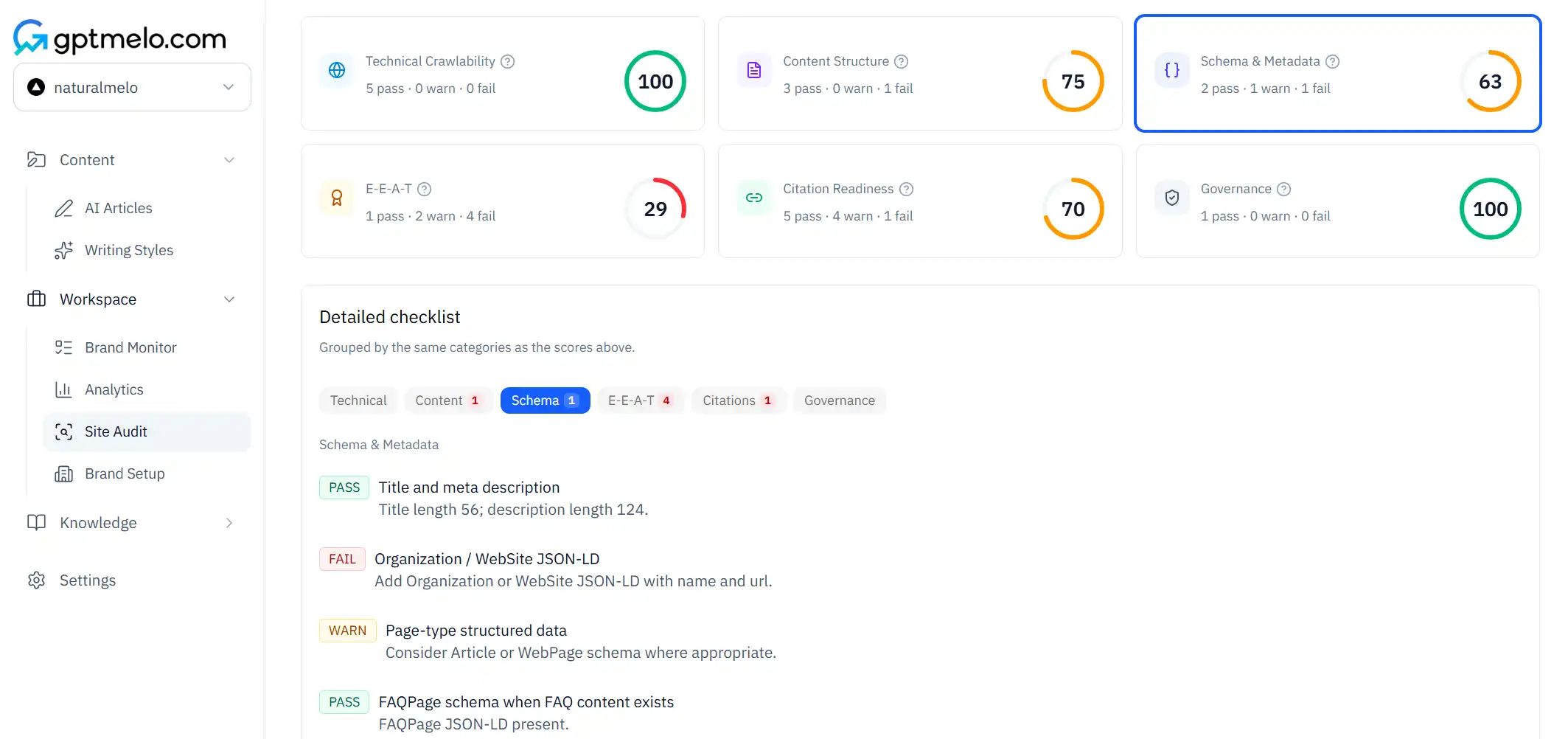
- Crawl — sitemap and robots when discovery is the suspect
- Citation readiness — when the question is “would an assistant quote this?”
That sequence costs little and tells you whether you need a paid suite or a CMS fix. The craft behind the scores lives in AI content optimization.
When paid suites earn the budget
Paid SEO and AI writing tools help when:
- Editors need briefs and outlines every week
- You track rankings across large URL sets
- Multiple writers share a scoring workflow
They do not replace complete table cells or real sources. If you are weighing Surfer-style optimizers against citation readiness checks, read the gptmelo vs Surfer comparison after your free pass—not instead of it. Frase-style brief tools belong in the same evaluation moment via gptmelo vs Frase when briefs are the bottleneck.
Shortlist by gap, not by logo count
| Gap | Tool type | Wrong buy |
|---|---|---|
| Wall-of-text intros | Structure / GEO content check | Another keyword explorer |
| FAQ schema drift | Structured data validator | Extra writing assistant |
| Orphan or blocked URLs | Sitemap / crawler check | Content score plugin alone |
| Need briefs at volume | Paid SEO / brief suite | Sixth free checker you ignore |
| Citations as a KPI | Readiness check, then optional monitor | Monitor-only stack |
Prefer one primary tool per gap. Benchmark narrative for the wider market sits in the GEO tools benchmark resource when you need a longer comparison frame.
How visibility actually moves
Search visibility improves when:
- Priority templates pass structure and schema checks
- Answers sit early enough to extract
- Crawlers can fetch the same HTML humans see
It does not reliably move because a plugin turned green while tables stayed empty. Track operational pass rates before you celebrate AI referral folklore.
A practical weekly rhythm
- Monday — pick one failing template URL from last week’s checker export.
- Mid-week — ship the intro + list (or table) fix with the editor who owns the page.
- Friday — re-run the free structure check; only then open a paid suite ticket if briefs or rank tracking are still the bottleneck.
That cadence beats buying three tools in one afternoon and reading none of the reports. Writers still need sources and facts—the tools only score whether the published shape can be lifted.
When the team asks “are we doing AI SEO yet?”, point at pass rates on priority templates, not at a new logo on the tools slide. If leadership wants a vendor comparison, score your own template first so the demo compares against a fixed URL—not against a slide of feature checkboxes.
Common mistakes
- Buying a suite before one template passes a free structure check.
- Treating density or “AI score” as proof of citation readiness.
- Running six overlapping tools and ignoring every report.
- Comparing competitors before scoring your own URL.
- Shipping AI drafts without a human fact-check and a structure re-check.
- Measuring success only by plugin greens while FAQ HTML stays click-gated.
Free check: one URL before you buy a suite
Open the GEO Content Checker. Paste one priority URL — score it before you buy a suite, not after the demo. No account required.
1. Fill the form. Keep From URL selected and paste that live page. Switch to Paste content only if fetch is blocked.
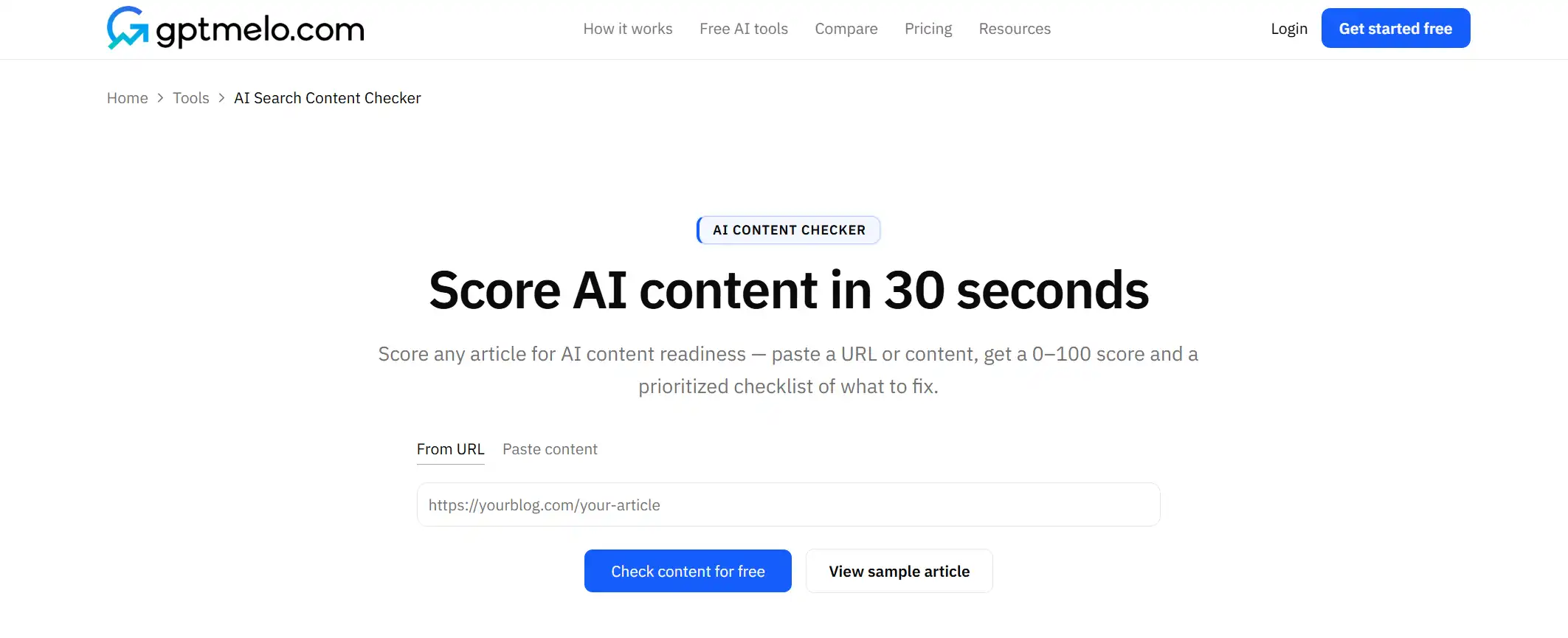
2. Check. Click Check content for free.
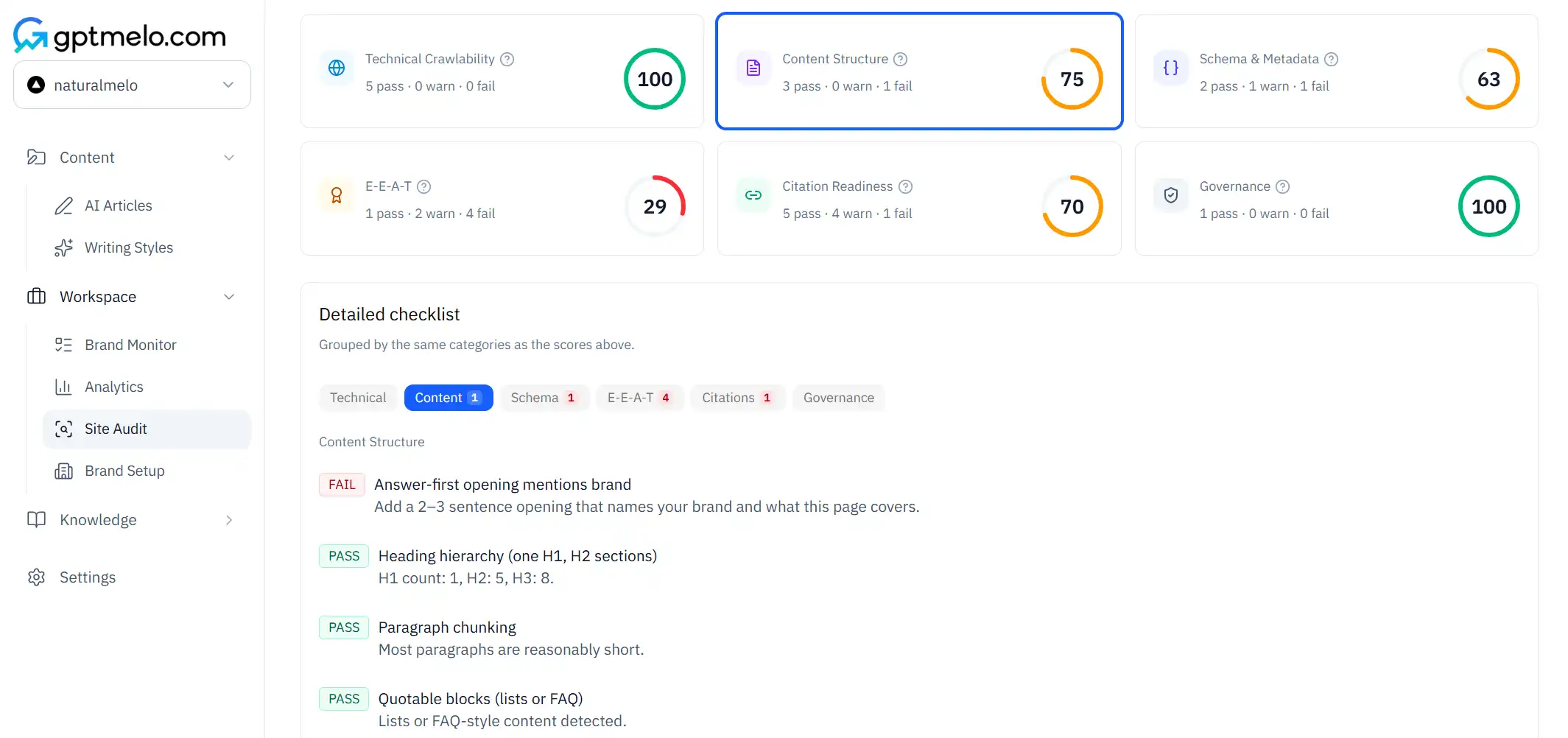
3. Read the result. You get a score plus pass/warn/fail rows (topic clarity, brand fit, readability, structure, quotable blocks). The screenshot is a sample — yours follows the URL you pasted. Glance at the biggest fail. The score is not a ranking guarantee.
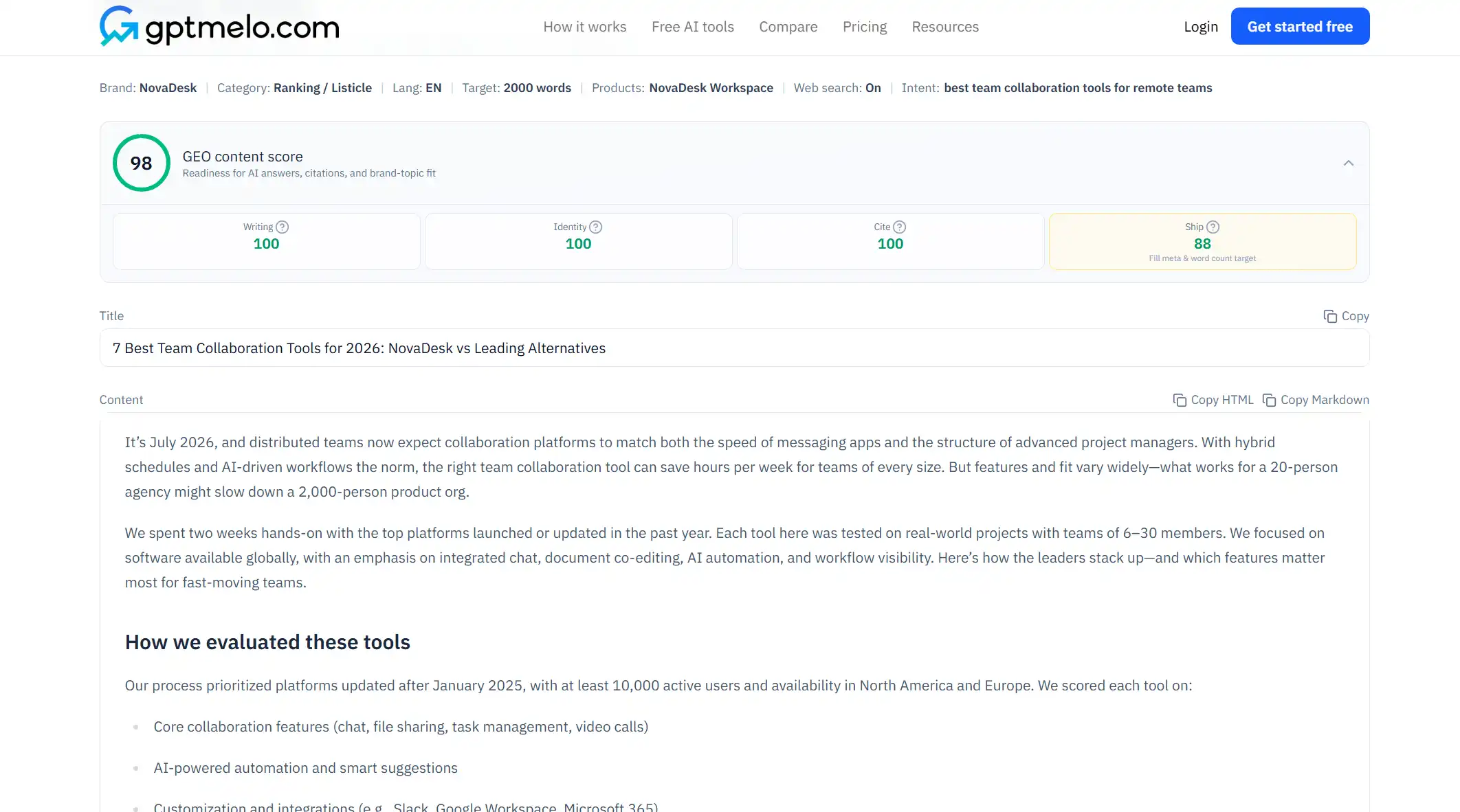
4. Fix the live page, then check again. Edit the HTML people and models actually fetch. Do not treat this window as the page.
FAQ
What are the best AI content optimization tools?
Start with free structure, schema, and citation checks; add paid SEO or writing suites when you need briefs at scale or rank tracking.
Are free AI content optimization tools enough?
For pre-publish structure and trust signals, yes on many sites; paid tools help when you need team workflows or SERP tracking.
How do AI content tools differ from classic SEO tools?
Classic tools chase rankings and density; AI-oriented checks score quotable blocks, schema match, and citation readiness.