GEO Audit: Crawl Access and Citation Readiness

Key takeaways
- A GEO audit checks crawl access and citation readiness—not only blue-link SEO.
- Fix robots, sitemap, and schema before blaming thin copy.
- Use free URL checks for spot fixes; run Site Audit when you need a full-site pass.
A GEO audit asks two questions classic SEO reports often skip: can AI crawlers fetch the URL, and is the page structured enough to quote? Rankings and backlinks still matter—but if GPTBot is Disallowed and the intro never answers the query, citation readiness never starts. Check priority URLs first, then expand.
| Situation | I’d start here | Skip if |
|---|---|---|
| Leadership wants AI visibility this quarter | Full-site GEO audit on crawl + structure | You only need a title-tag rewrite |
| Docs never appear in ChatGPT-style answers | robots.txt + sitemap + quotable answer blocks | The page is behind login on purpose |
| Engineering has a long SEO crawl backlog | Filter for AI crawler and schema fails first | Every issue is already a known 404 queue |
| You ship weekly and break robots generators | Re-audit after each deploy that touches CDN | The file has not changed in months |
What a GEO audit covers
Treat GEO (generative engine optimization) as crawl access plus citation readiness—not a rebrand of keyword density. A useful audit walks four layers:
| Layer | What you verify | Common fail |
|---|---|---|
| Access | robots.txt Allow/Disallow for AI user-agents | Blanket “block all bots” packs |
| Discovery | Sitemap entries resolve; orphans are intentional | 404s and stale lastmod |
| Structured data | JSON-LD / FAQ / Article types validate | Empty or conflicting schema |
| Quotable HTML | Direct answers in the opening, lists, attributed stats | Wall of prose with no claim a model can lift |
Google Search Central still documents crawl and sitemap basics for search; AI pipelines reuse many of the same access rules and then demand clearer on-page answers. The AI ready website framework maps the stack; this page is the audit order.
Step 1: Confirm crawlers are allowed on purpose
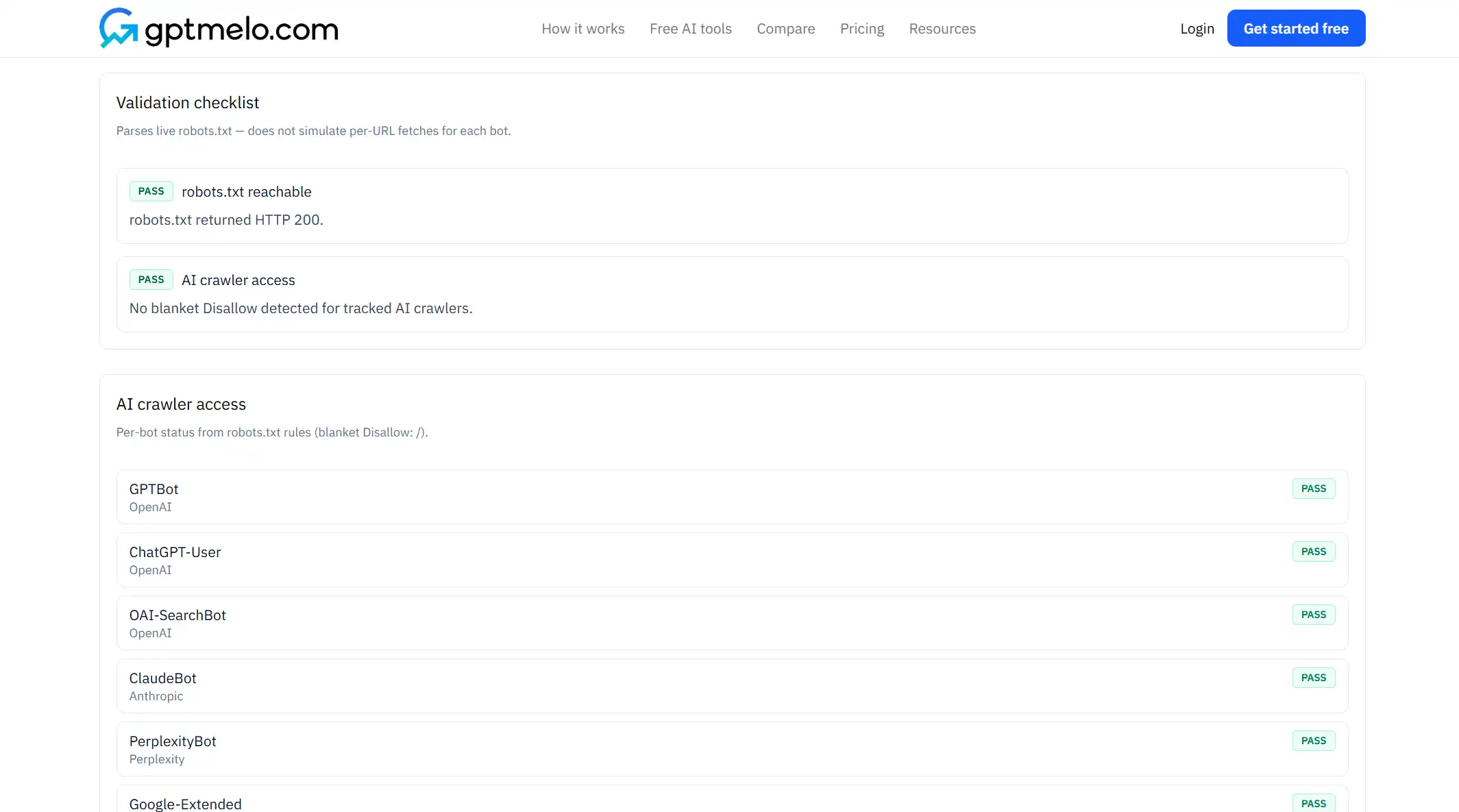
Open live https://yoursite.com/robots.txt. List every AI-related User-agent (GPTBot, ClaudeBot, Google-Extended, PerplexityBot, and whatever else your file names). For each agent, write the business intent in plain words—allow public docs, block training on /blog only, deny all.
If intent and file disagree, fix the file. For GPTBot-specific Allow/Disallow patterns, use the GPTBot robots.txt checklist. Spot-check with gptmelo’s AI Crawler Checker after every deploy that regenerates robots.
Step 2: Validate discovery before you rewrite copy
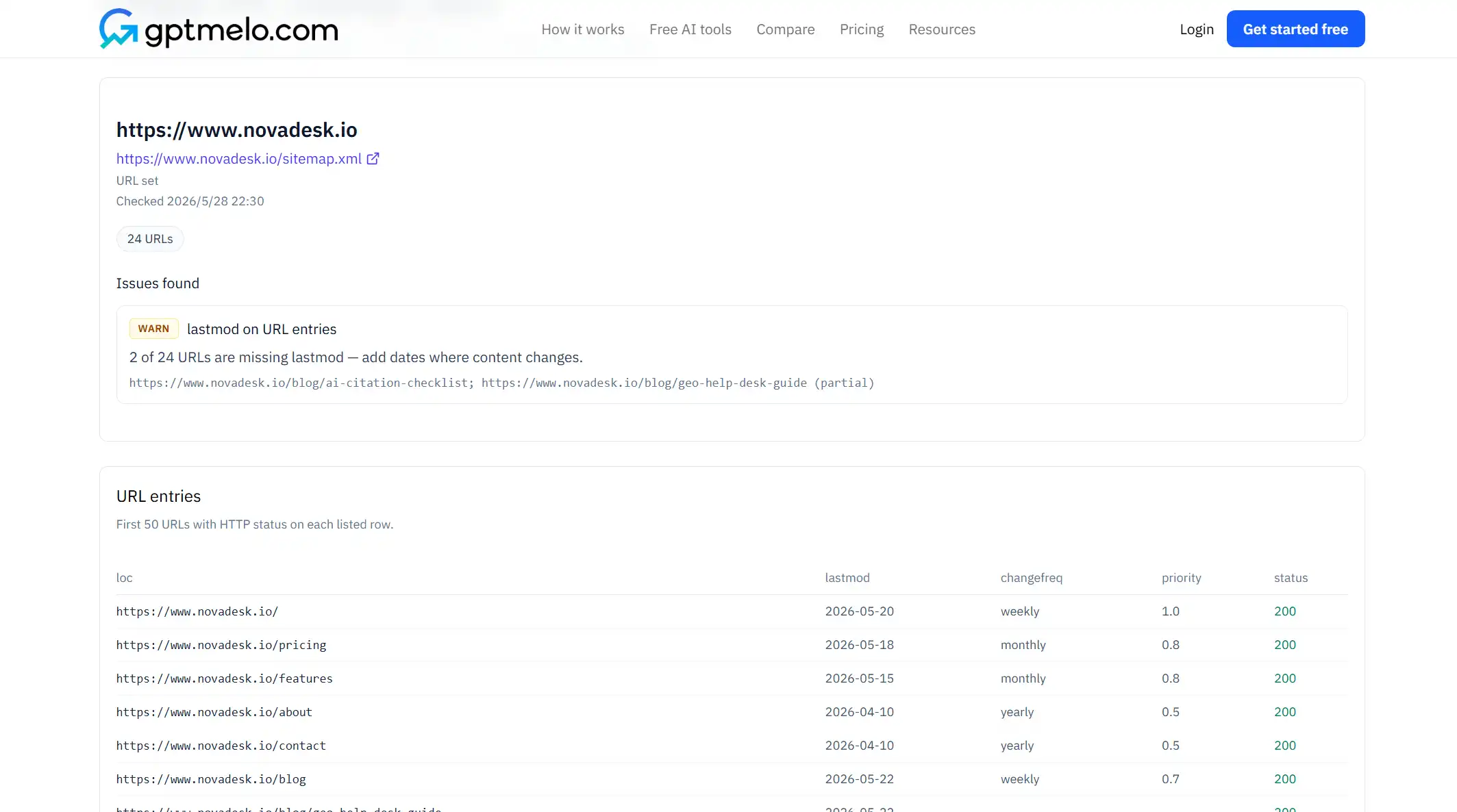
Crawl and cite problems often start as discovery gaps:
- Priority URLs missing from the sitemap
- Sitemap URLs that 404 or redirect through chains
- Pages listed in the sitemap but Disallowed in robots.txt
lastmodfrozen while the HTML changed
Run an XML sitemap checker on the live sitemap URL. Fix generator bugs once—do not hand-edit one orphan forever.
Step 3: Check structured data on pricing and docs URLs
Schema will not invent expertise, but broken JSON-LD wastes a clean signal. On pricing, docs hubs, and flagship guides:
- Validate Article / FAQ / Product (or your real types) with a structured data checker
- Remove empty properties and conflicting duplicates
- Keep FAQ answers short enough to quote
See schema markup for AI search for the checklist. Pair schema health with the GEO site audit workflow when leadership wants one crawl-and-structure review.
Step 4: Score whether the page can be quoted
Access without quotable answers still fails. On each priority URL, check:
- First screen answers the query in plain sentences
- Lists or steps models can lift without the rest of the essay
- Stats and claims name a source or date
- Author or org trust signals where the topic needs them
Use the GEO checklist as the content review, or paste a URL into the GEO Content Checker for a structure score before you commission a rewrite.
If the page scores poorly, fix the HTML before you buy another monitoring license. Monitoring will not invent claims a model can quote.
Step 5: Turn findings into a fix queue
Sort fails by blast radius:
- Sitewide robots or CDN mistakes (every URL)
- Sitemap / discovery bugs (many URLs)
- Template-level schema (section templates)
- Page-level copy and EEAT (one URL at a time)
Assign owners. Re-run the same checks after the fix ships—audits without a retest become slide decks.
A practical cadence for most marketing sites:
- Weekly: re-check robots and sitemap after deploys that touch CDN, middleware, or generators
- Per publish: run a content/structure check on the URL you just shipped
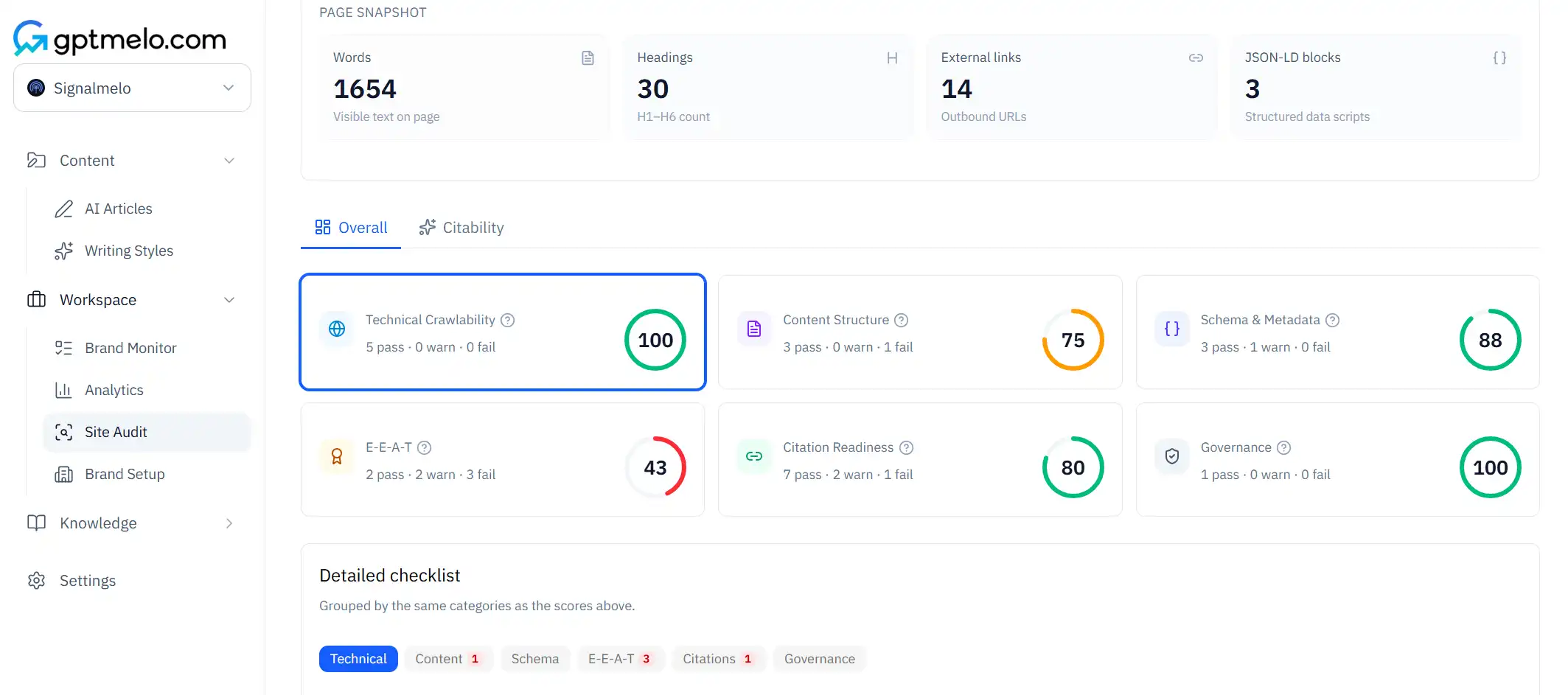
- Monthly or per campaign: full-site Site Audit when leadership wants one shared backlog
Do not mix those cadences into one endless crawl with no owner. The GEO checklist keeps the content layer honest when engineering owns only technical tickets.
What a GEO audit is not
A GEO audit is not:
- A guarantee that ChatGPT will cite you next week
- A substitute for product-market fit or accurate claims
- A reason to ignore classic indexability forever
It is a way to stop blaming “AI SEO” when the real fail is Disallow, a broken sitemap, empty schema, or an intro that never answers the question. Keep the report short enough that engineering can open tickets from the top ten rows.
Common mistakes
- Treating a classic SEO crawl report as a finished GEO audit
- Blocking all AI bots from a viral snippet without reading which agents you still need
- Rewriting intros while robots.txt Disallows the path
- Shipping schema that does not match visible FAQ answers
- Skipping a re-check after the CDN or robots generator changes
- Filing fifty low-priority title tweaks before fixing sitewide crawl blocks
Free check: crawl access and citation readiness
When the job is the whole domain—not one draft—run Site Audit. It queues crawl access and citation readiness with fix prompts so engineering and content share one backlog.
For a single page first, use the free crawler, sitemap, or content checkers above. Expand when Disallow, sitemap fetch, and quotable blocks fail on the same template across URLs.
FAQ
What is a GEO audit?
A review of whether AI crawlers can fetch your pages and whether those pages are structured enough to quote—crawl rules, discovery, schema, and quotable blocks.
How is a GEO audit different from an SEO site audit?
Classic SEO audits emphasize indexability and rankings; a GEO audit adds AI crawler access and whether pages ship quotable, attributed answers.
What should I fix first after a GEO audit?
Blocked crawlers and broken discovery first, then schema and intros that answer the query on priority URLs.