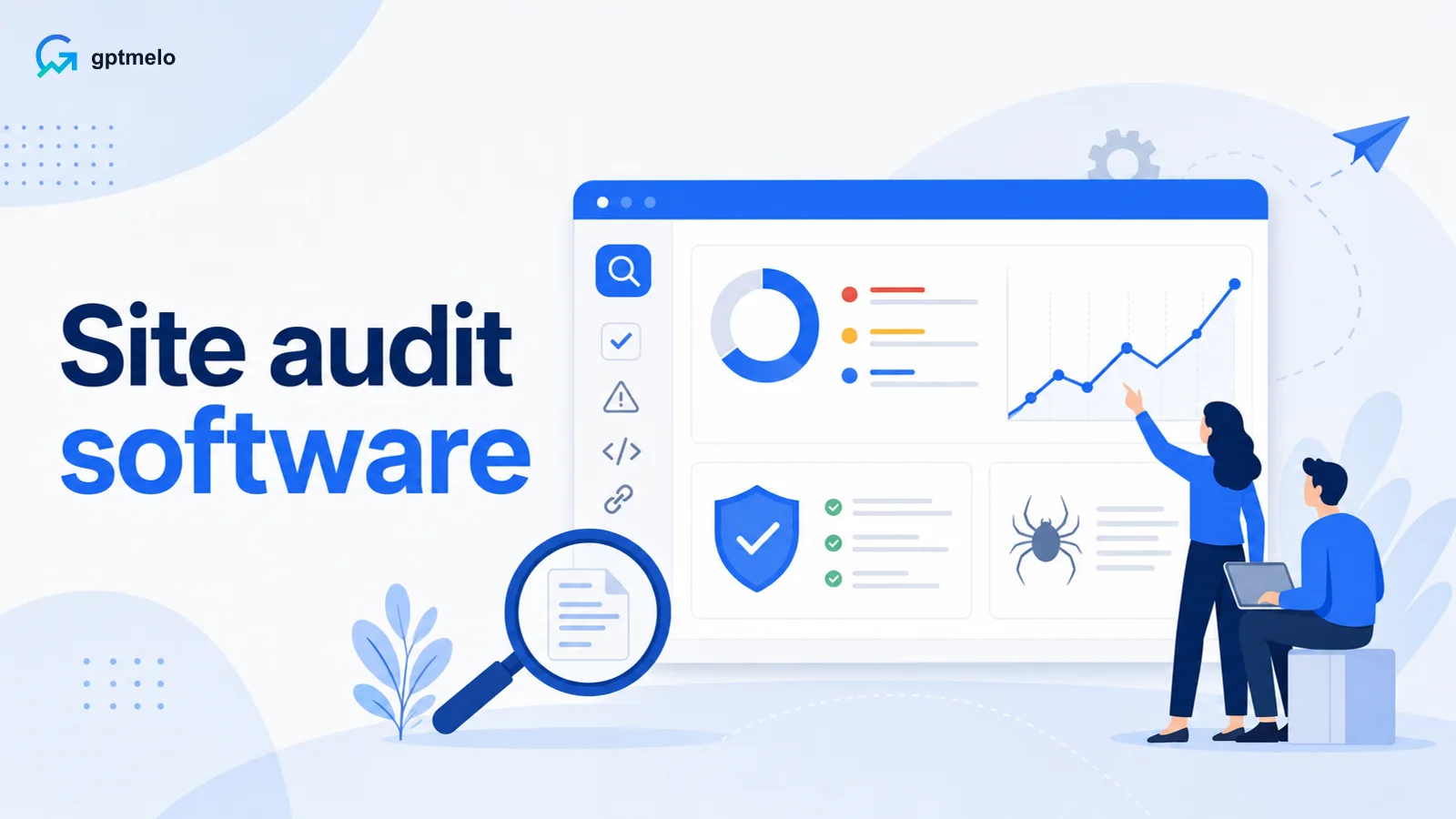
Site Audit Software: Pick Tools by Crawl Gap
Key takeaways
- Pick site audit software by the gap: crawl errors, content structure, or full-site GEO readiness.
- Free URL checks cover most pre-publish misses before you buy a suite.
- Use a full Site Audit when leadership wants one pass/warn/fail queue across the domain.
Site audit software is only useful when it matches the gap you can actually fix this sprint. A 40,000-URL crawl full of low-priority redirects will not help if GPTBot is blocked and your docs never answer the query. Shortlist by job—access, discovery, structure, or a full-site GEO queue—then buy depth.
| Job | I’d start here | Skip if |
|---|---|---|
| Confirm AI crawlers can fetch public docs | Free crawler + robots check | Policy already bans those agents |
| Find 404s and sitemap lies | XML sitemap / crawl suite | The site is five URLs |
| Score whether pages are quotable | GEO content / citation checkers | The HTML is still a wireframe |
| One backlog for leadership | Full-site Site Audit product | You only need a title-tag pass |
| Links, rankings, and classic tech SEO | Established SEO suites | AI citation is the only KPI |
What site audit software actually does
Most products crawl (or sample) URLs and flag:
- HTTP errors, redirect chains, and canonical conflicts
- robots.txt / meta robots mismatches
- Missing titles, thin templates, duplicate clusters
- Sometimes schema, Core Web Vitals, or internal-link graphs
GEO-aware audits add whether AI crawlers are allowed and whether pages ship quotable blocks. That is the difference between a blue-link SEO report and a GEO audit. The GEO tools benchmark compares monitoring and writing tools; this page is how to pick the audit product.
Free checks when the gap is one URL
Before you renew a suite license, run free spot checks on the URLs leadership actually names:
- AI Crawler Checker — robots Allow/Disallow for AI agents
- XML Sitemap Checker — discovery and stale entries (sitemap guide)
- Structured Data Checker — JSON-LD validity
- GEO Content Checker — structure and citation readiness on the page
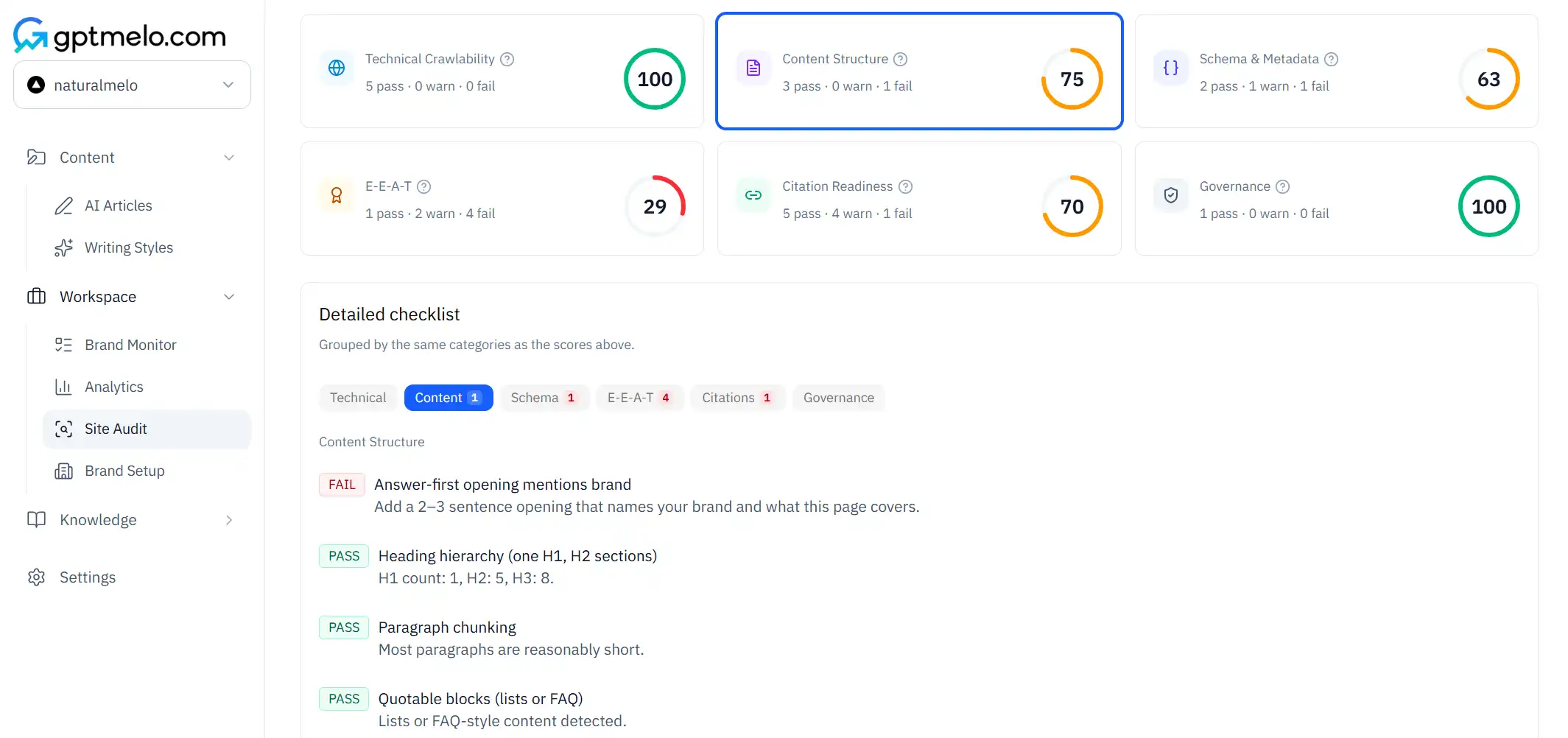
These cover most pre-publish misses. Browse the full tools hub when the job is a single draft, not a domain crawl.
Write down the fail in ticket language (“GPTBot Disallow on /docs”, “sitemap 404 for /pricing”) so the next tool demo has to show it can catch the same class of issue. If free checks find nothing and citations are still missing, the gap is probably content quality or authority—not another crawler SKU.
Classic SEO suites when indexability is the backlog
Ahrefs, Semrush, Screaming Frog, Sitebulb, and peers earn the budget when:
- You already report on organic rankings and backlinks
- Engineering needs exportable crawl graphs at scale
- The known gaps are thin templates, redirect debt, and log-file sampling
Wrong fit: treating their default reports as finished proof that AI answer engines can cite you. Pair suite crawls with AI crawler checks and page-structure checks when citation is a KPI. For a broader free-tool map by job, see AI search optimization tools.
If your suite already crawls robots.txt and sitemaps well, do not rip it out—add the GEO checks the export never scored. The expensive mistake is paying twice for the same 404 list while still missing Disallow and empty FAQ schema.
Full-site GEO products when you need one queue
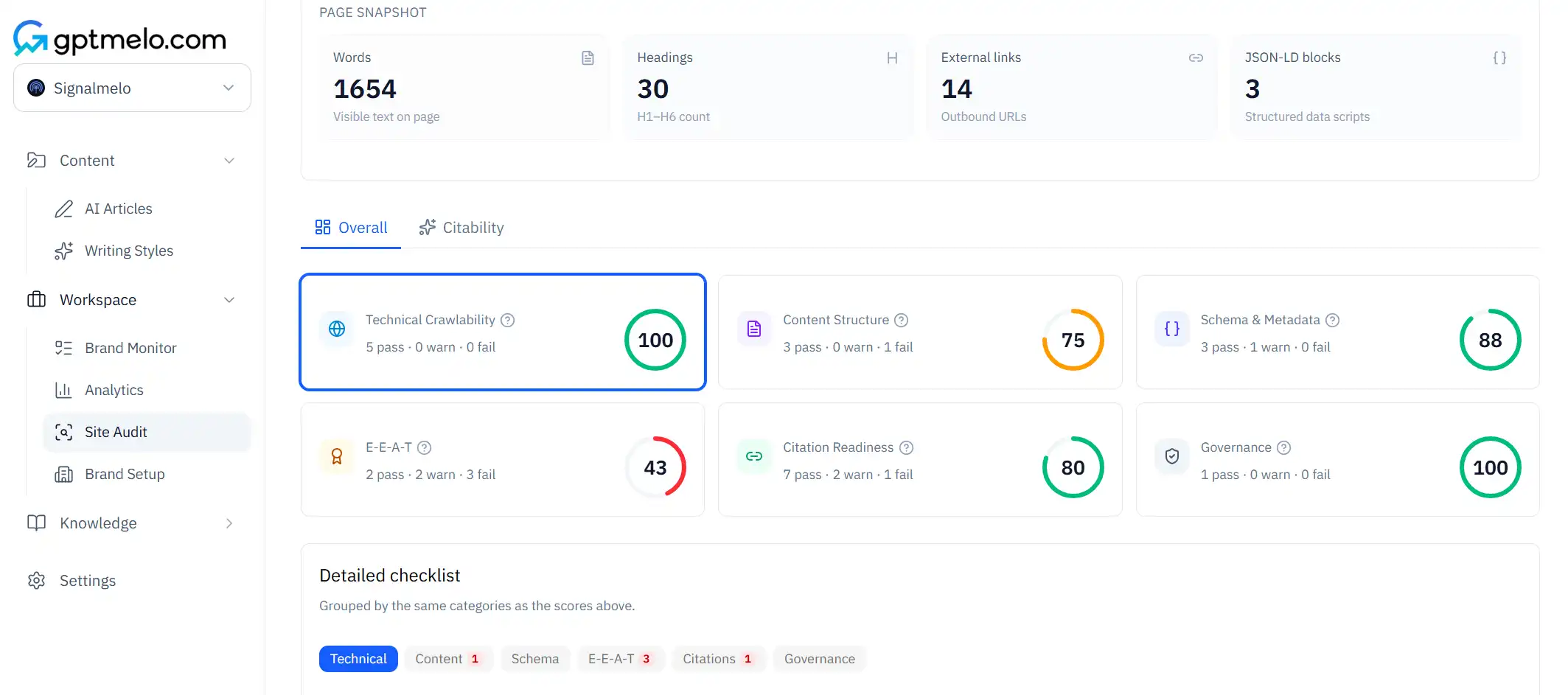
When marketing and engineering share one pass/warn/fail backlog—crawl access, discovery, schema, and content structure—use a GEO-focused Site Audit rather than stitching five CSV exports by hand.
gptmelo’s Site Audit is built for that backlog: checklist items with fix prompts, not only raw crawl noise. Walk the GEO site audit workflow so owners know which check they own. The AI ready website framework is the longer map behind the product.
How to shortlist without a demo marathon
- Name the gap in one sentence (access, discovery, structure, or full-site queue)
- Run free checks on three priority URLs; keep screenshots of fails
- If fails are sitewide, evaluate a full crawl product; if they are page-level, stay on free checkers + editorial fixes
- Only then compare suite pricing against the hours you spend merging exports
Skip vendor demos that start with “AI visibility score” and never show robots or schema.
Fit vs skip by who owns the backlog
Solo or small content team: stay on free URL checkers until the same fail repeats across templates. Then consider Site Audit so you are not copy-pasting five tool outputs into a spreadsheet every Monday.
SEO team with an existing suite: keep the suite for rankings and link graphs. Add GEO-focused checks for AI crawler access and clear extractable answers—do not rip out Screaming Frog because a blog post said “GEO.”
Agency delivering monthly reports: ask which KPI the client actually reviews. If it is still classic organic sessions, lead with suite crawls. If leadership asks why docs never show up in AI answers, put GEO audit findings on the cover page.
Common mistakes
- Buying another suite license because the last crawl CSV felt incomplete
- Ignoring robots.txt while optimizing titles inside a blocked path
- Expecting classic SEO software to score ChatGPT citation readiness
- Running weekly full crawls with no owner for the top ten fails
- Skipping free URL checks before a procurement cycle
- Judging tools by dashboard beauty instead of whether fails become tickets
Free check: pick by crawl gap
When the leftover job is a domain-wide GEO readiness queue, Site Audit is the product for that gap—not another suite CSV. For one URL, use the free checkers above first.
Escalate when the same crawl or citation fail repeats across templates. Match the buy to the gap you can assign, not to dashboard chrome.
FAQ
What is site audit software?
Tools that crawl a site for technical and content issues—broken URLs, robots conflicts, thin pages, and (for GEO) citation readiness.
What is the best free site audit tool?
Depends on the gap—crawler and sitemap checkers for access, content checkers for clear extractable answers; full-site products when you need one prioritized queue.
Do I need Semrush or Ahrefs for a GEO audit?
Classic SEO suites help with indexability and links; add GEO-focused checks when AI crawler access and quotable blocks are the reported gap.