Blog Writing Examples: Three Outlines You Can Copy

Key takeaways
- Blog writing examples work when you copy the outline: reader, title, first paragraph, headings—not the sentences.
- A how-to post, an explainer, and a rewritten intro cover most public posts. Skip homework and ads.
- Put the outline into GEO Content Writer after you fill a short brief; edit facts before you publish.
Blog writing examples are models of a public post: a title that keeps its promise, a first paragraph that answers, and headings a reader would look for. Examples of blog writing below are outlines you can copy. Do not copy the sentences. Do not turn them into a homework essay.
| If this is you | I’d start here | Skip if |
|---|---|---|
| You want a model, not another tips list | The three outlines below | You still needed the tips page |
| You are writing a how-to post | Example 1 | You needed a product help page |
| You are explaining a term | Example 2 | You only needed a slogan |
| Your draft opens with history | Example 3 | The first paragraph already answers |
Examples of blog writing
Examples of blog writing work when you can copy the outline, not the topic. Each sample names a reader, a point, a title, an opening, and headings. How to do that on your own post is in blog writing tips. Fill reader and point in the content writing brief template before you draft from an example.
If the piece is a longer article with sections, article writing has article samples. This page stays on blog posts: one page, one promise, you can publish this week.
How-to blog post example
Reader: someone flying tomorrow with only a carry-on.
Point: they can pack two days of clothes without sitting on the zipper.
- Title: How to pack a carry-on for a two-day trip
- Opening: roll the two outfits, put liquids in a clear bag in the top pocket, and leave room for the laptop—do not bring a third pair of shoes.
- Headings: What to put in first · Liquids and the laptop · What to leave out
- Under each heading: numbered steps, one line for when the bag will not close
Copy the outline: a title that is the task, an opening that is the method, headings that are the next questions. Swap in your reader. Do not copy the packing topic. Do not turn the steps into a product list.
That is a blog how-to. It is not an ad for packing brands, and it is not a packing essay for class. If your draft lists features and never numbers a step, it is not a how-to yet.
Explainer blog post example
Reader: a person who just heard “credit freeze” on a call and does not know if they should file one.
Point: they know what a freeze does, what it does not do, and what to do next if they want one.
- Title: What a credit freeze does (and does not)
- Opening: a freeze stops new creditors from pulling your file; it does not lock your existing cards or your bank login.
- Headings: What it blocks · What it does not block · How to place one · How to lift it for a day
- Under each heading: one definition, one everyday example, no unsourced percentages
Copy the outline: define, then show what it is not, then what to do next. Keep one everyday example per heading. Do not list terms with no example. Do not invent a statistic you cannot source.
That is a blog explainer. The opening is already the post. A reader who only needed the difference can leave after paragraph one. If they stay, the headings answer the next questions in order.
Weak intro vs strong intro
Example 3 — rewrite the opening
Weak: “Travel has always been part of human culture, and packing well is more important than ever in our busy lives.”
Strong: “To pack a carry-on for two days, roll two outfits, bag the liquids, and skip the extra shoes. If the zipper strains, remove the hair dryer—not the charger.”
Copy this difference, not the packing sentences. The strong intro is already the post. The weak intro makes the reader hunt. If your draft starts like the weak line, cut it and put the point first. History, origin stories, and “in this post I will” wait until the answer is on the page.
These three are everyday posts. They are not exam essays, not journal papers, and not a list of keywords. Pick one outline. Fill your reader and point. Then draft.
What these examples are not
Skip these models when you needed:
- Tips without a sample — that list is in blog writing tips
- A reusable heading outline you fill every week—that is a different template
- A school blog entry aimed at a rubric
- A help doc inside a product—see SaaS content writing if that is the real task
- An ad whose only aim is a click—see copywriting vs content writing
If the post also has to rank for one query, use article writing for SEO after you have this outline.
If you draft in ChatGPT, paste the outline (reader, title, headings) first. Outline-first prompts are in ChatGPT for content generation. For a human edit after a model draft, see edit AI content.
Common mistakes
- Copying sentences instead of the outline
- Using a homework blog entry as the model
- Opening with history like Example 3’s weak line
- Turning a how-to into a feature dump with no steps
- Asking ChatGPT to write a blog with no reader, title, or headings
- Collecting examples instead of finishing one post
- Treating these outlines as a weekly heading list you never rewrite
Free check: the outline you copied
Open gptmelo’s GEO Content Writer. Draft the outline you copied — not the packing or freeze sentences. No account required.
1. Fill the form. Topic is your reader, title, opening, and headings after you swapped in this week’s post. Brand name and Brand website are the blog that will publish this post. Open More options only if you need them.
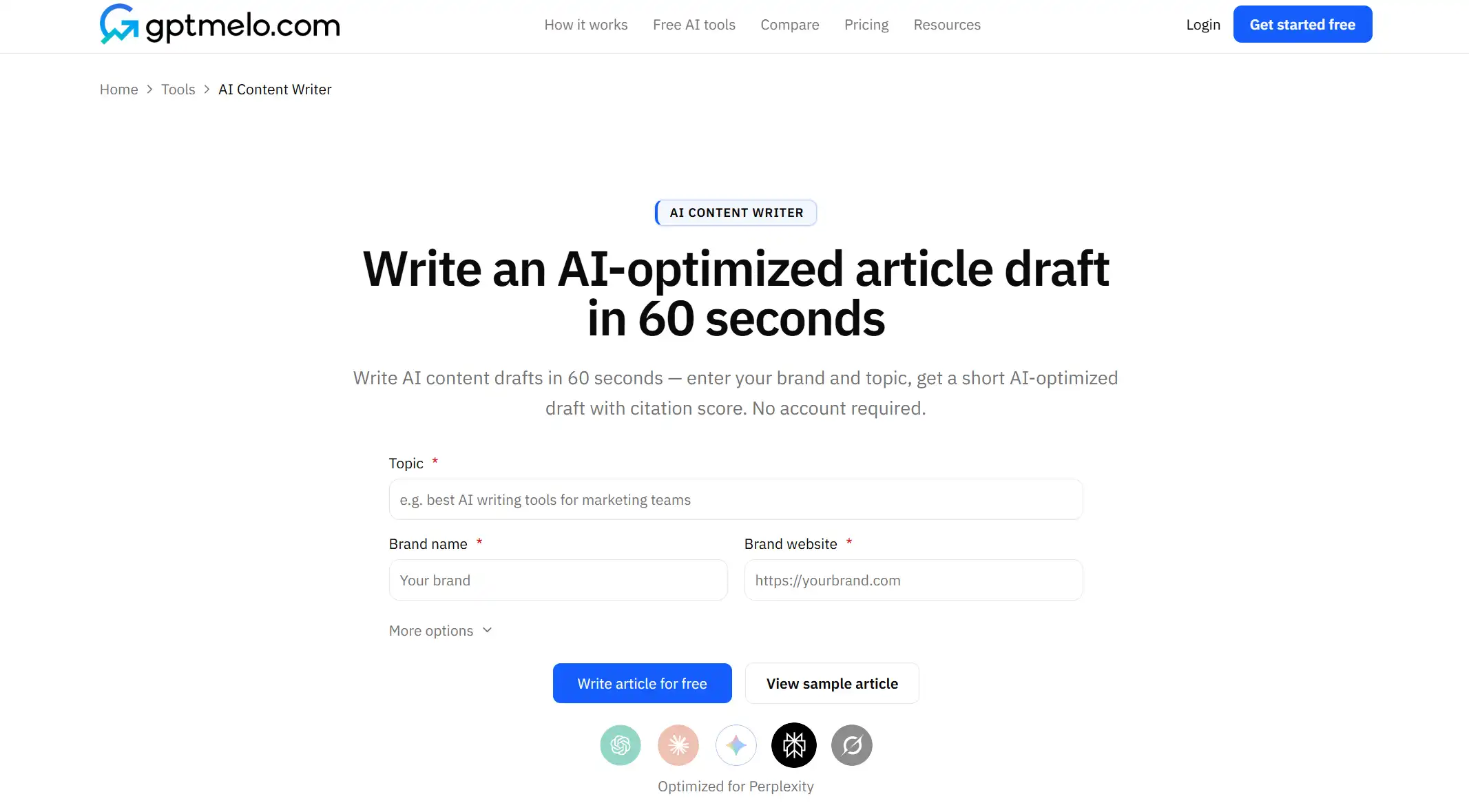
2. Write. Click Write article for free.
3. Read the result. You get a draft next to a GEO content score (Writing, Identity, Cite, Ship). The screenshot is a sample — yours follows Topic. Glance whether that outline still holds: title, opening, headings. Glance at Writing. Use Copy HTML or Copy Markdown. The score is not a fact check.
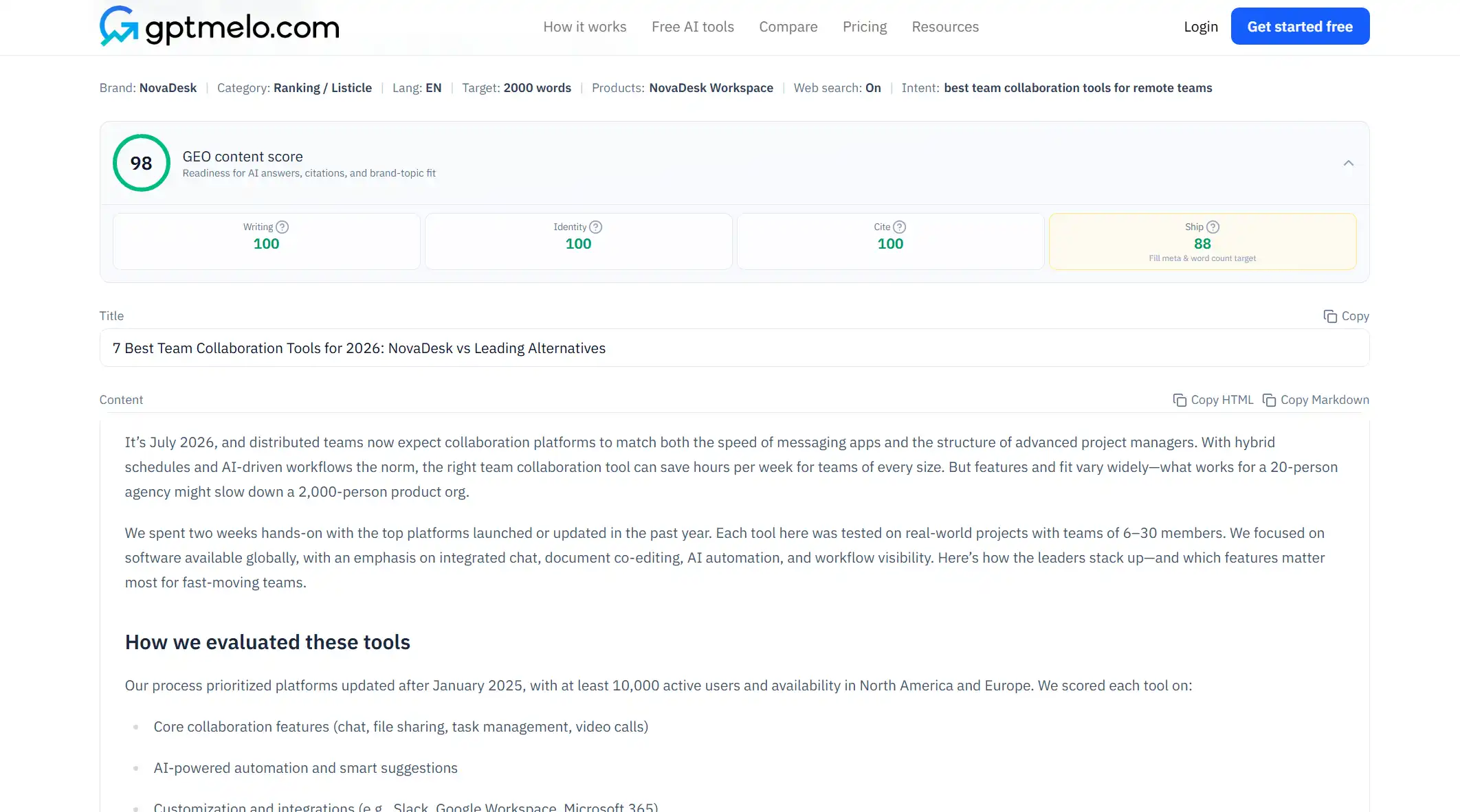
4. Edit, then put it on a URL. Read the draft before anyone else sees it. Do not treat this window as the live page.
The write-check-publish path is in GEO article writing.
FAQ
What are blog writing examples?
Sample posts you can copy as an outline: a how-to with numbered steps, an explainer that defines then shows a case, and a weak intro rewritten so the point is in paragraph one.
What are examples of blog writing I should copy?
Copy the outline, not the topic. Take the title, the opening that answers, and the heading list. Do not paste someone else’s sentences into your page.
Are blog writing examples the same as blog writing tips?
No. Tips tell you what to do. Examples show a finished post. Use tips when you need the steps. Use examples when you need a model.
Can I use these examples as a blog post template?
They are models, not a reusable heading outline you fill every week. Fill reader and point first. Then copy the outline for this post only.
Are homework blog entries good examples?
No. A school blog entry aims at a rubric. These examples are public posts a stranger can use.